Mobile App Development Explained: The Ultimate Step-by-Step Guide
By Sieora – Chennai’s Leading Mobile App Development Company
Introduction
In today’s digital-first world, mobile apps are no longer optional — they are essential for business growth. From boosting customer engagement to streamlining operations, mobile apps have become the backbone of digital transformation.
However, developing a mobile app that users love and that meets your business goals isn’t as simple as just writing code. It requires strategic planning, market research, design thinking, and robust technology implementation.
At Sieora, we specialize in delivering end-to-end mobile app development services — from ideation to launch — helping startups, enterprises, and brands turn ideas into powerful apps.
In this ultimate guide, we’ll walk you through everything you need to know about mobile app development — step by step.
1. What is Mobile App Development?
Mobile app development is the process of designing, building, testing, and deploying software applications for smartphones, tablets, and wearable devices.
It involves a combination of creativity and technology — crafting apps that are visually appealing, user-friendly, and highly functional.
At Sieora, we follow a holistic approach that includes:
- Understanding business needs
- Defining user journeys
- Choosing the right technologies
- Building scalable and secure solutions
2. Why Mobile App Development Matters in 2025
With 7.7 billion mobile users globally and 90% of digital time spent on apps, investing in a mobile app is no longer optional. In 2025, apps are transforming industries:
- Retail: Personalized shopping experiences
- Healthcare: Remote consultations & IoT integration
- Finance: Secure digital transactions & fintech innovations
- Education: AI-powered e-learning platforms
Business Benefits of Having a Mobile App:
- Enhanced customer engagement
- Increased brand visibility
- Revenue generation via subscriptions, ads, and in-app purchases
- Improved customer retention
Pro Tip: Businesses that invest in mobile-first strategies grow 40% faster than competitors relying on traditional models.
3. Types of Mobile Apps
Choosing the right type of mobile app is critical to achieving your business goals.
a) Native Apps
Built specifically for iOS or Android. High performance and better user experience. Ideal for apps that require complex features like AR, VR, or heavy animations.
b) Cross-Platform Apps
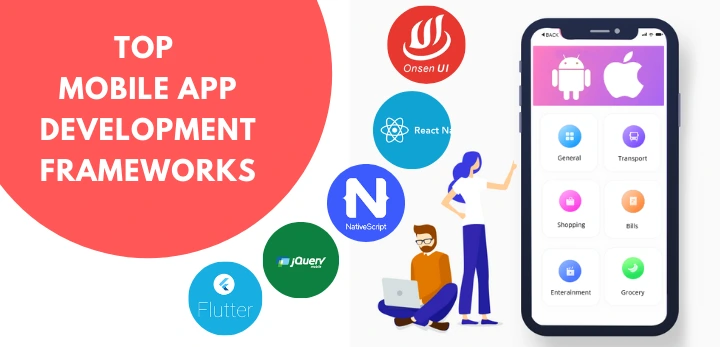
Built using frameworks like Flutter or React Native. Single codebase runs on both iOS and Android. Faster development and cost-effective.
c) Web Apps / PWAs
Run through a mobile browser but behave like apps. No installation required, but slightly limited in functionality.
4. Choosing the Right Mobile App Development Approach
Your development approach depends on:
- Target audience (iOS vs Android users)
- Budget and timeline
- Features and scalability needs
| Approach | Best For | Examples |
|---|---|---|
| Native | High performance apps | Instagram, WhatsApp |
| Cross-Platform | Faster go-to-market | Airbnb, Uber Eats |
| PWAs | Lightweight apps | Starbucks, Pinterest |
At Sieora, we help businesses choose the right approach based on scalability, budget, and business goals.
5. Mobile App Development Lifecycle – Step by Step
Here’s the step-by-step process we follow at Sieora:
Step 1: Market Research & Planning
- Analyze competitors
- Identify target audience
- Define app goals & KPIs
Step 2: UI/UX Design
- Wireframes & prototypes
- Intuitive, user-centric design
- Consistent brand experience
Step 3: Development
- Choose tech stack (React Native, Flutter, Kotlin, Swift)
- Backend development & API integration
- Secure, scalable architecture
Step 4: Testing & QA
- Functional testing
- Performance optimization
- Security & data protection
Step 5: Deployment
- Publishing apps on Google Play Store & Apple App Store
- Setting up CI/CD pipelines
Step 6: Post-Launch Support
- App updates & maintenance
- Bug fixes & performance monitoring
- Adding new features based on user feedback
6. Tech Stack for Modern Mobile App Development
At Sieora, we leverage cutting-edge technologies to build high-performing apps:
- Frontend: Flutter, React Native, Swift, Kotlin
- Backend: Node.js, Python, Java, .NET
- Databases: MongoDB, PostgreSQL, Firebase
- Cloud Platforms: AWS, Google Cloud, Azure
- AI/ML Integration: Personalized recommendations, predictive analytics
- IoT Integration: Smart apps for connected devices
7. Cost of Developing a Mobile App in 2025
The cost depends on:
- Complexity (basic vs advanced features)
- Platform (iOS, Android, or both)
- Design & development hours
Average cost estimates:
- Basic app: ₹3L – ₹5L
- Mid-level app: ₹5L – ₹12L
- Enterprise app: ₹12L+
For an accurate estimate, get a free consultation with Sieora.
8. Common Challenges & How to Overcome Them
- Scalability issues: Use cloud-native architecture
- Security threats: Implement end-to-end encryption
- Poor performance: Optimize APIs & use lightweight frameworks
- User retention: Build personalized user experiences
9. Future Trends in Mobile App Development
- AI & Machine Learning Integration
- IoT-Driven Smart Apps
- 5G-Powered Experiences
- Augmented & Virtual Reality
- Super Apps & Mini Apps
10. Why Choose Sieora for Mobile App Development
At Sieora, we are passionate about transforming ideas into digital products.
- End-to-End Development — from concept to deployment
- Cross-Platform Expertise — Flutter, React Native, Kotlin, Swift
- Agile Methodology — faster go-to-market
- Proven Track Record — 100+ apps delivered
- Post-Launch Support — continuous optimization
Connect with us:
Conclusion
Mobile apps are redefining business growth and customer engagement. Whether you’re a startup or an enterprise, the key to success lies in choosing the right partner.
At Sieora, we combine creativity, technology, and strategy to build apps that deliver impact.
Ready to bring your app idea to life? Book a free consultation with Sieora today!