★★★★★
Sieora's system has given us real peace of mind. Their team understood our safety needs and delivered a solution we can genuinely rely on.
Head of Safety OperationsNippon Paint India
Sieora is a machine vision company in Chennai building AI visual inspection that catches what manual QC misses — scratches, cracks, burrs and misplaced parts, on every unit, at full line speed. Our machine vision system is deep-learning-first, trained on your own defects, and runs on standard industrial cameras with no hardware lock-in. It integrates with your PLC and MES to reject, stop or log on the line, and it's proven across brake pads, automobile parts, packaging and barcode verification — deployed across Chennai and India.
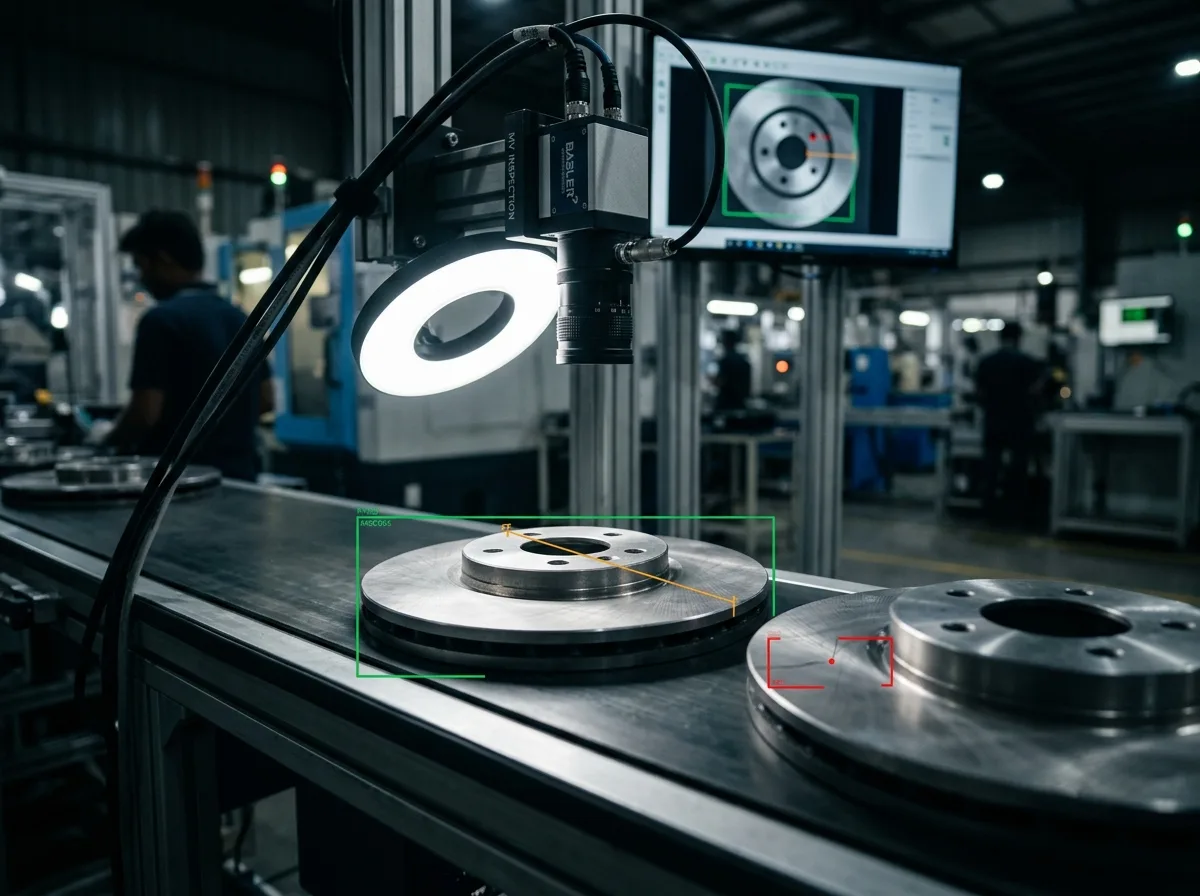 PASS · 0.02mm
CRACK · REJECT
PASS · 0.02mm
CRACK · REJECT
Enterprises, manufacturers and fast-growing startups build with Sieora.














A human inspector is sharp at 9am and tired by 3pm. They can't hold a sub-millimetre standard across thousands of parts, they slow the line down, and the defect that reaches your customer is the one nobody caught. For an OEM demanding zero-defect and traceability, "we checked a sample" isn't an answer.
Manual visual QC is typically 70–80% consistent and varies by shift, inspector and hour. The standard slips exactly when volume is highest.
Sub-millimetre cracks and burrs, at production speed, are simply beyond reliable human detection — every cycle, every part.
A sampled, paper-checklist process leaves no image record, no defect data, and nothing to show an auditor or an OEM customer.
People use these interchangeably. They're related, but not the same — and the difference tells you what this page is about.
The short version: machine vision is computer vision put to work on the factory floor. As a computer-vision company, Sieora brings the AI depth of the broad field to the exacting demands of the line. Explore our computer vision work →
Four stages, milliseconds apart, on every part that passes the camera.
A high-resolution camera and the right lighting capture each part; a deep-learning model (CNN / YOLO class) — trained on your labelled defect images, not a generic lab dataset — classifies it by defect type, severity and location.
The verdict drives a real action: trigger a reject arm, stop the line, or log the result. Every decision is saved with its image, timestamp and defect class — the traceability trail your customers and auditors ask for, integrated through your PLC and MES.
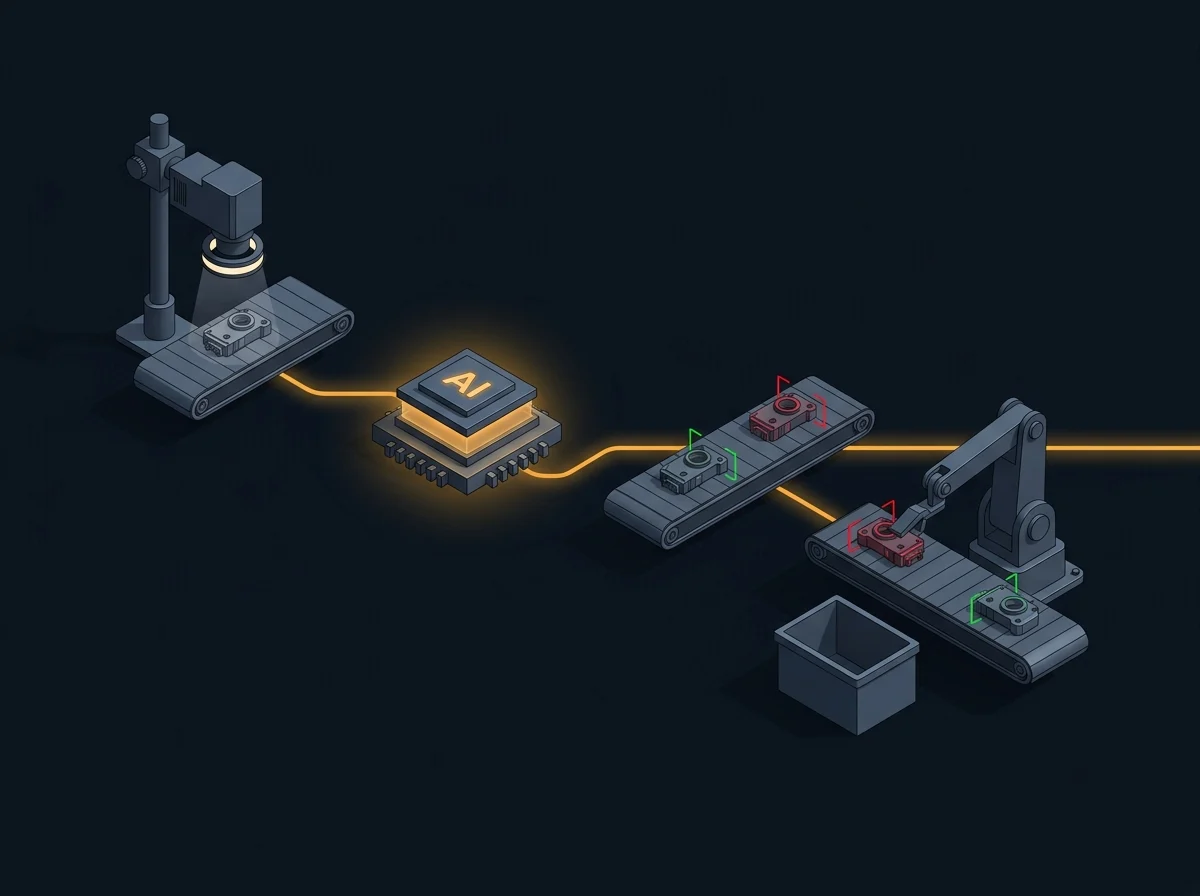 CAPTURE → CLASSIFY → ACT
One platform, trained per task, across the checks a real line needs.
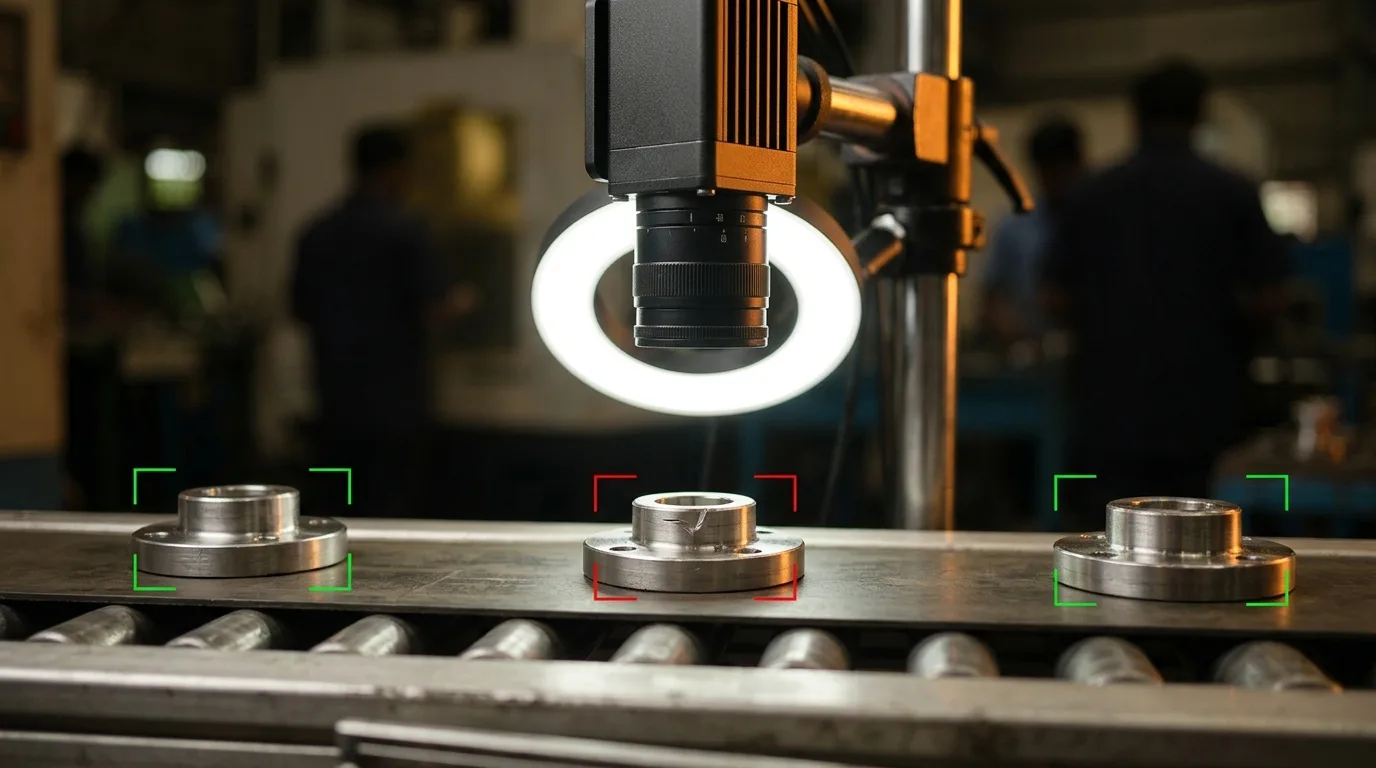
Scratches, dents, cracks, burrs, contamination and paint faults — sub-millimetre, on every cycle.
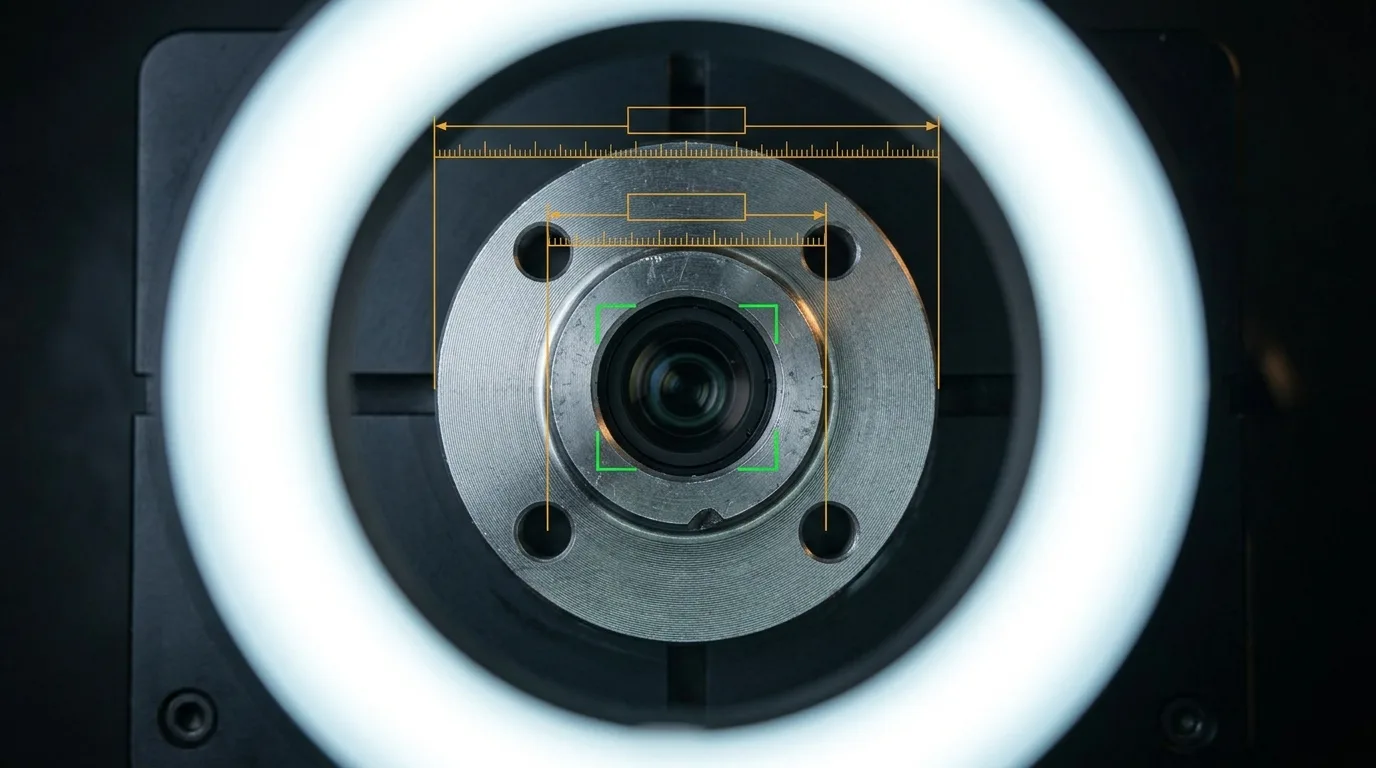
Gauging and measurement against tolerance, flagging out-of-spec parts before they move on.
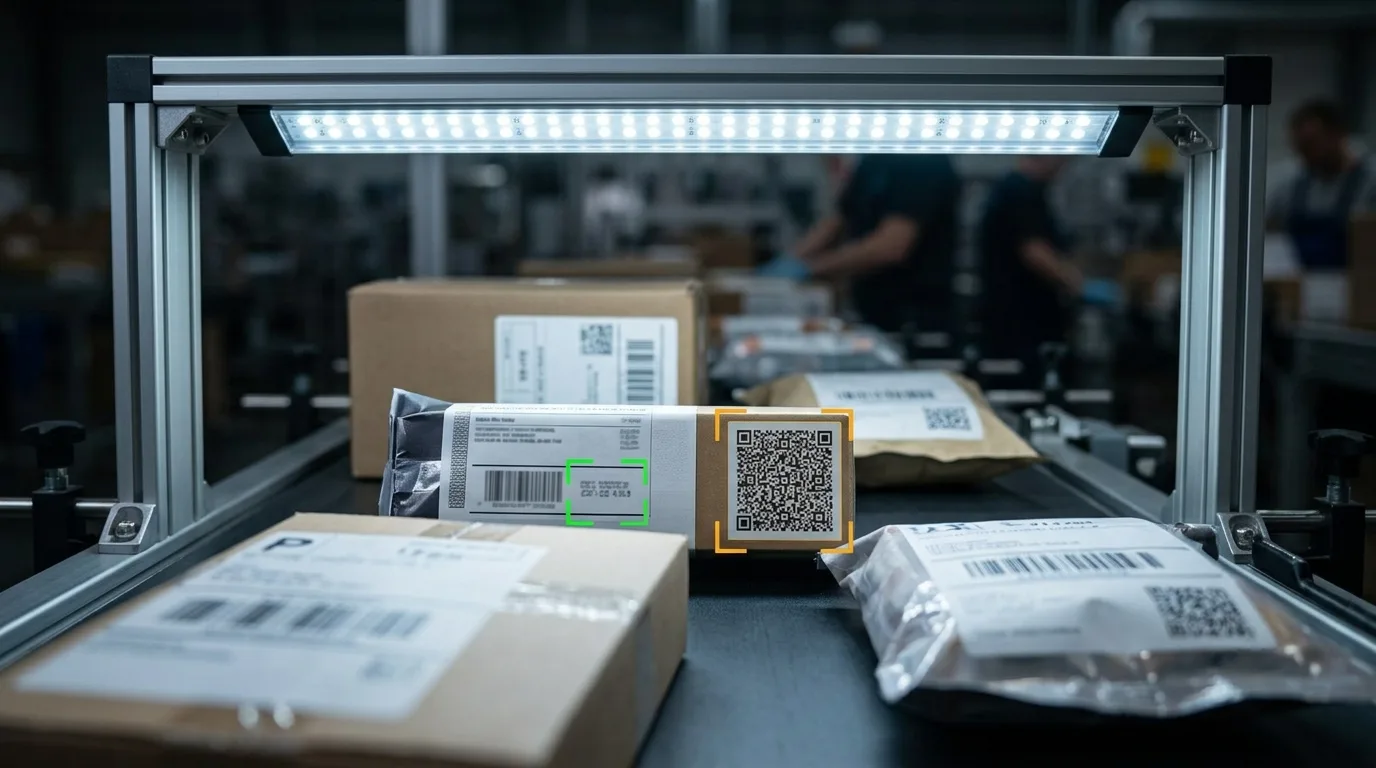
Barcode, QR and printed-label reading and validation — right code, right place, right print quality.
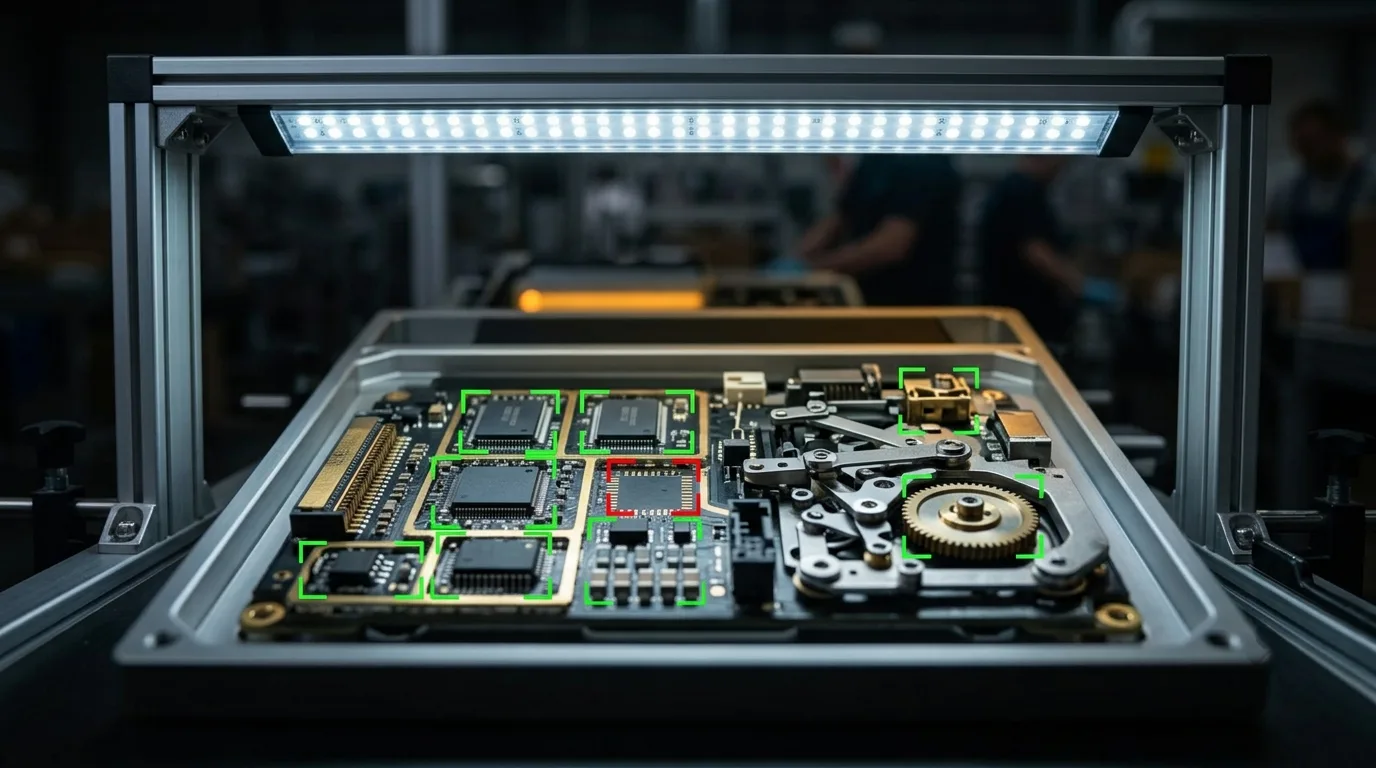
Confirms the right components are present and correctly positioned in the assembly — mistake-proofing.
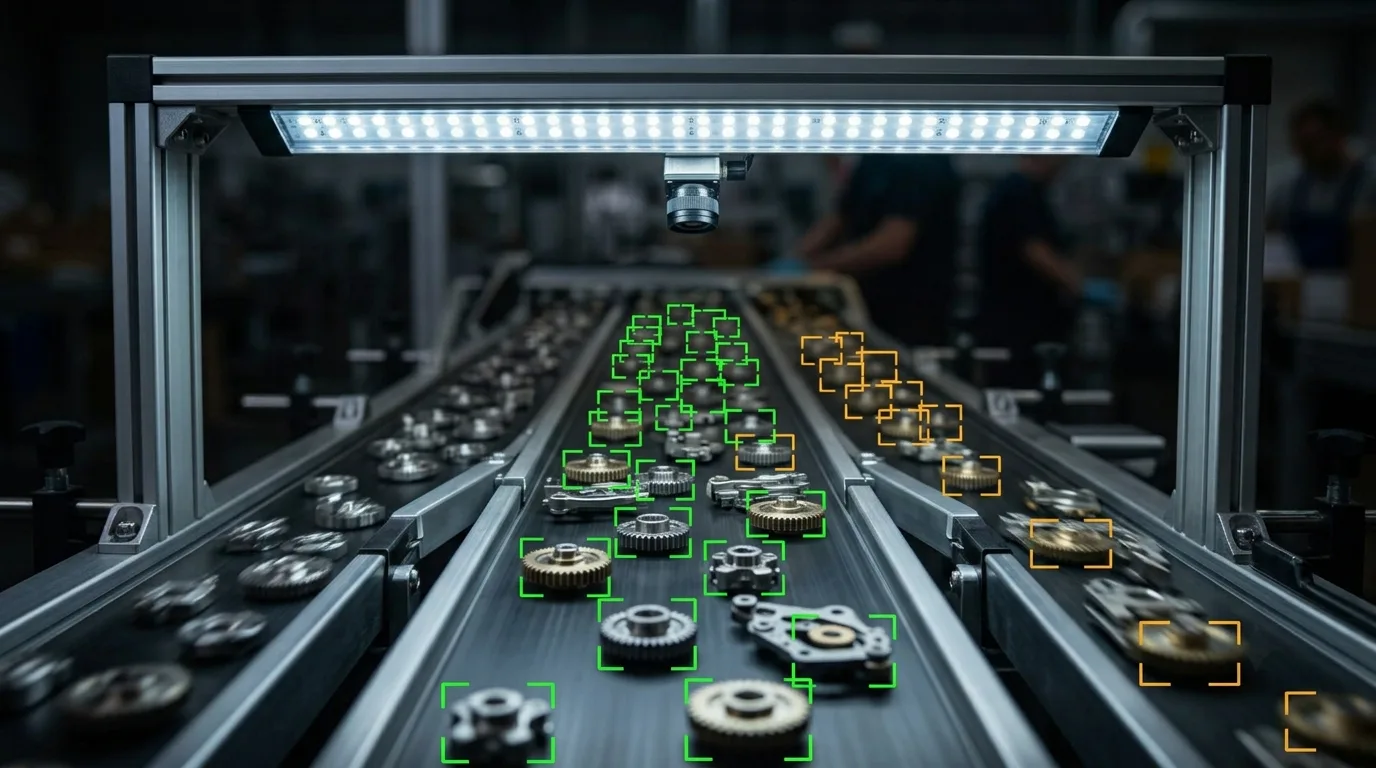
Automatic sorting and grading by defined criteria, at line speed.
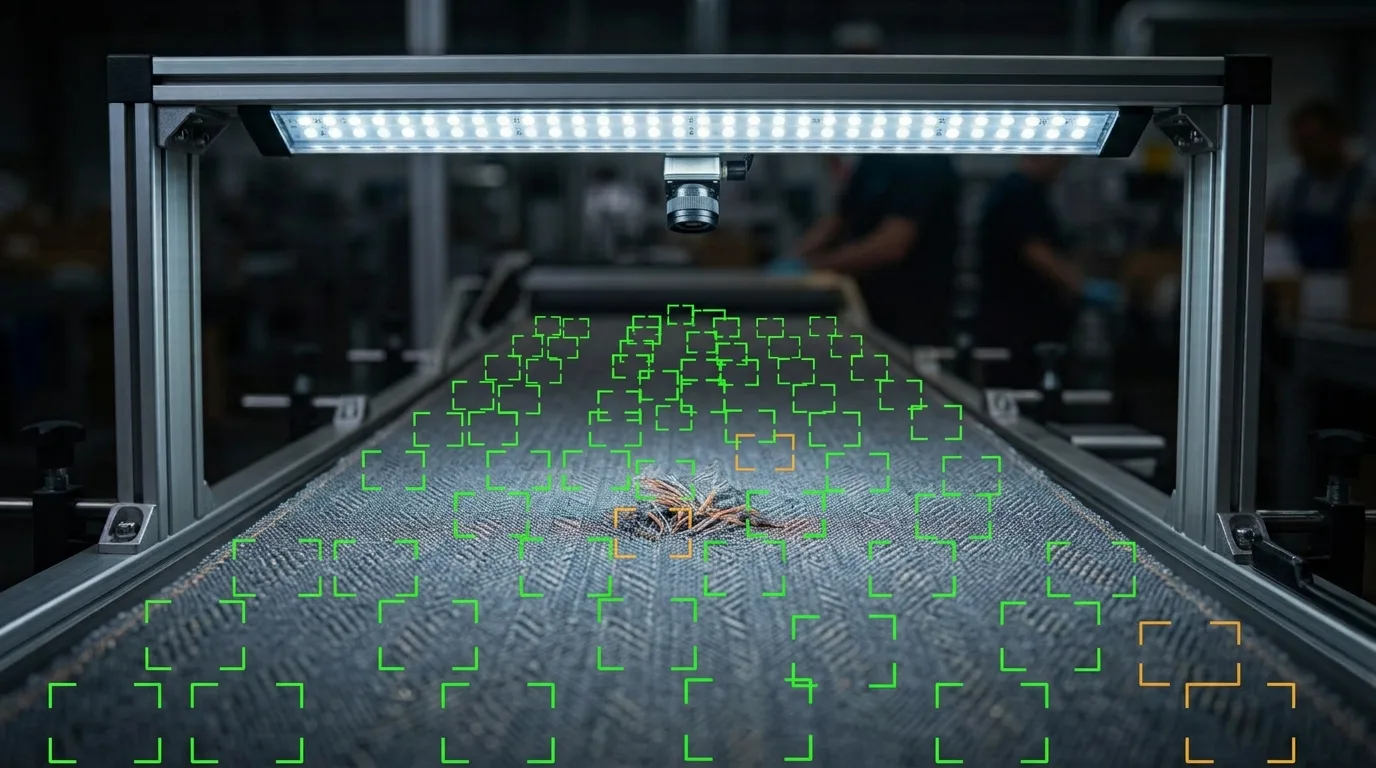
Consistency checks on colour and surface texture for quality assurance.
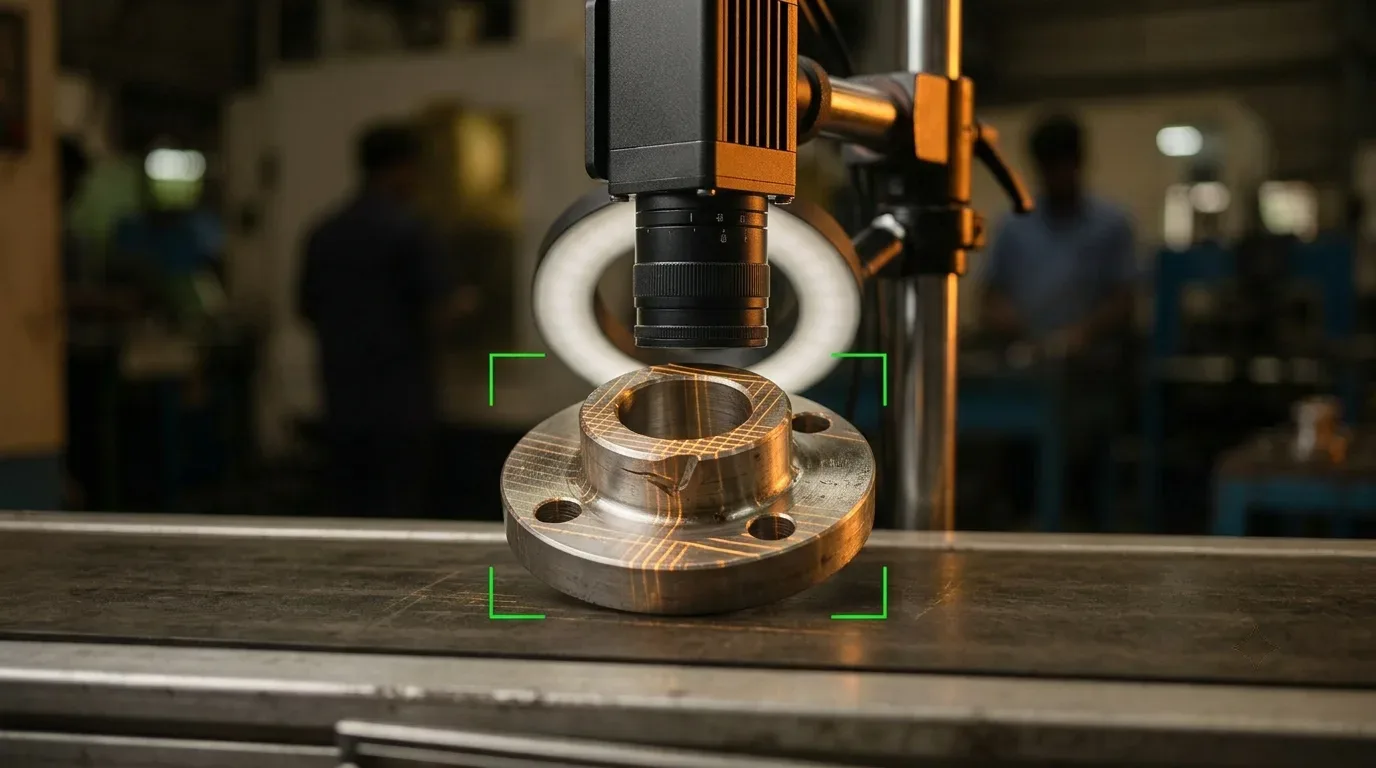
Depth and volume for shape, height and geometry checks beyond a flat 2D image.
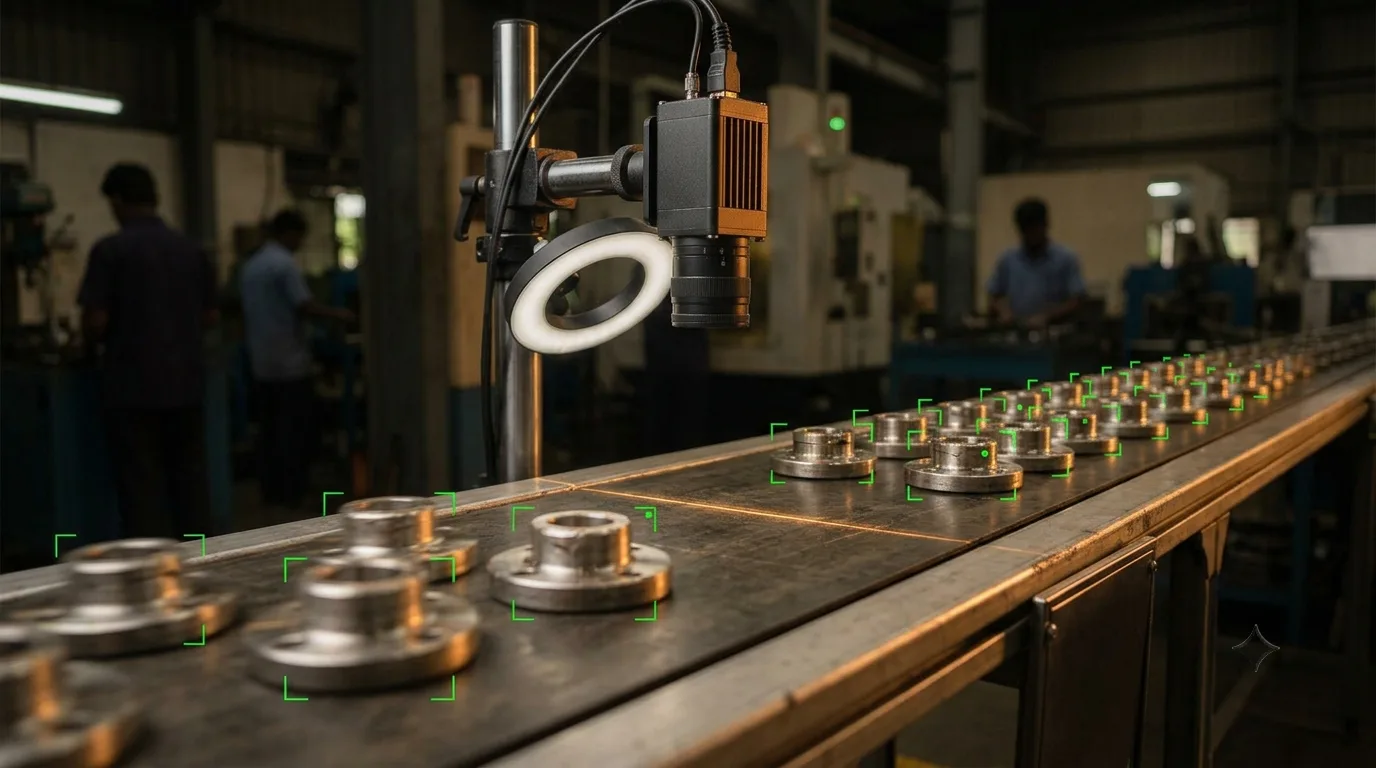
Accurate object counting on the belt or through a chute — no shortfalls, no overages.
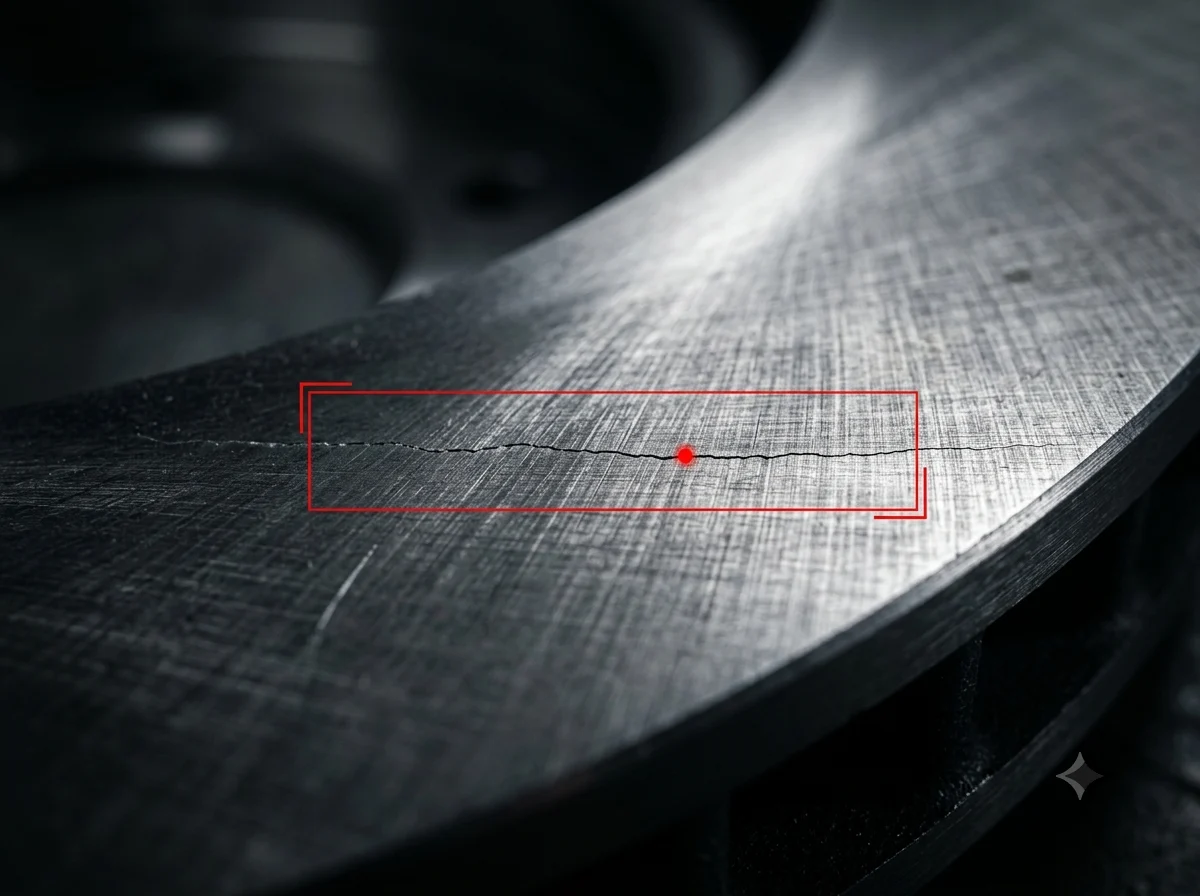 CRACK · 0.08mm
The check that manual QC fails most often. Deep-learning models catch scratches, dents, cracks, burrs, contamination and paint inconsistencies down to sub-millimetre — on any material or geometry, on every part, at full line speed.
Because the model is trained on your actual reject library, it learns your defects — not a generic notion of "damage" — so false rejects stay low and real faults don't slip through.
A mislabelled carton is a wrong shipment, a compliance breach and an unhappy customer. Machine vision reads and validates every barcode, QR code and printed label in real time — confirming the right code, in the right place, printed clearly enough to scan downstream.
It catches missing labels, misprints, wrong codes and placement errors before the product leaves the line — the kind of check that protects both dispatch accuracy and traceability.
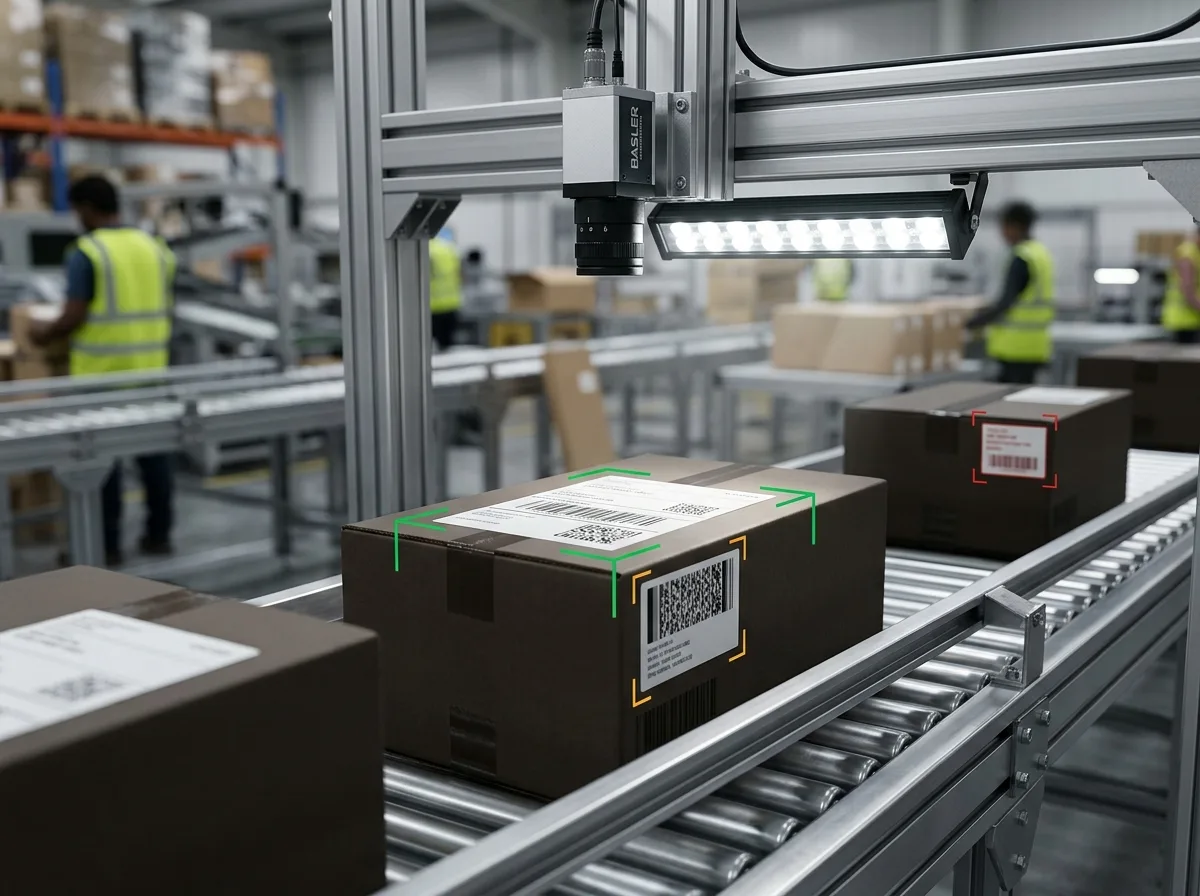 LABEL · VERIFIED
Wherever quality, consistency and traceability decide whether the part ships.
Crack, burr, weld and surface inspection; dimensional gauging; assembly Poka-Yoke for zero-defect supply to OEMs.
Label and barcode verification, seal and tamper checks, fill and placement — accuracy that protects every dispatch.
PCB and component presence, solder and placement checks, print verification at high speed.
Blister and fill inspection, print and code verification, and track-and-trace support for compliance.
Weave, print and colour-consistency inspection across the roll, catching defects manual checks miss.
Counting, sorting, colour and texture grading, and custom checks trained to your specific product.
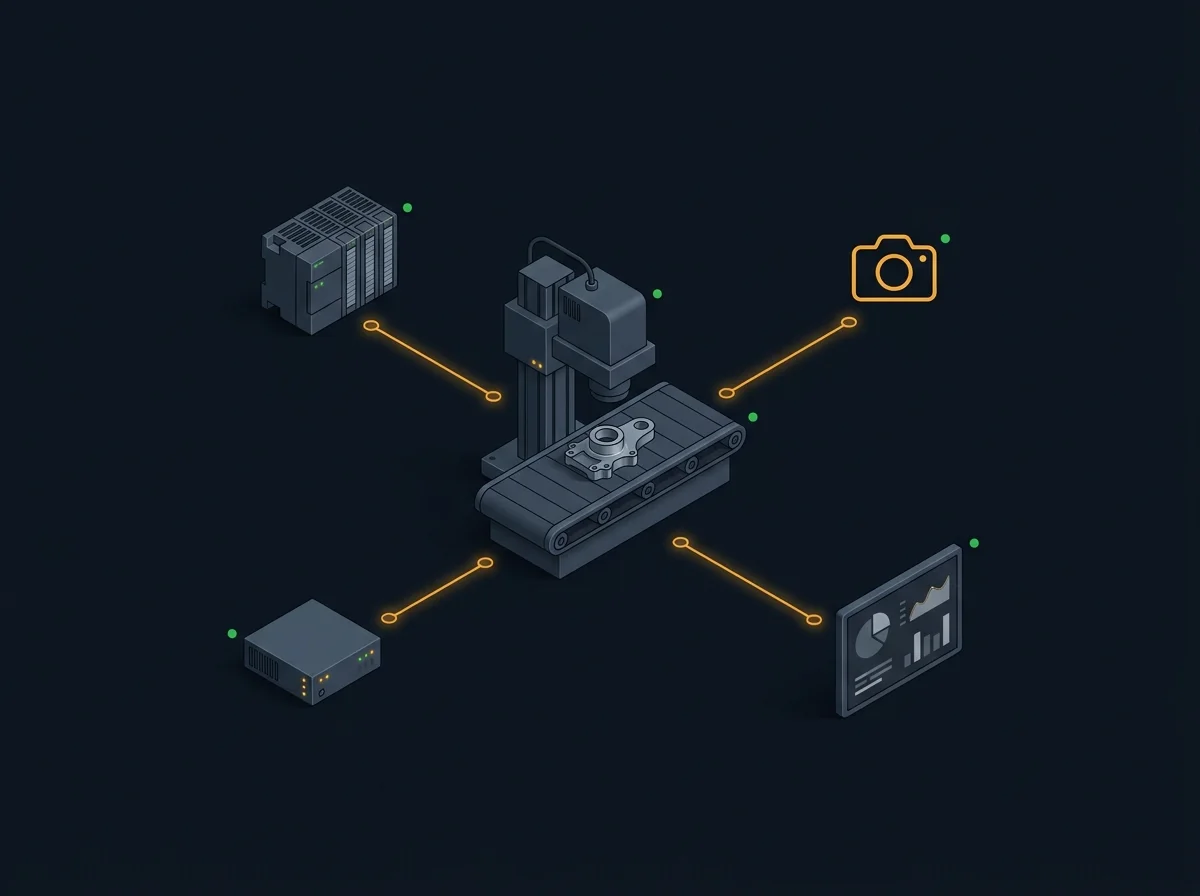 PLC · MES · IIoT
A full turnkey integrator sells you the whole stack — their cameras, their lighting, their AMC, their timeline. That's right for some plants. For many, it's heavy and expensive.
Sieora is software-led. The intelligence is the deep-learning model, so it runs on standard industrial cameras and slots into the line you already have — triggering reject arms, line stops and work orders through your PLC and MES, feeding quality data to your IIoT dashboards. No single-vendor hardware lock-in.
Vision projects need people on the floor — for lighting, angles, line trials and tuning. A local team is the difference between a system that works in a demo and one that works on your line.
Based in Chennai, on the OMR — we run feasibility and line trials at your site across Tamil Nadu, not over email.
We build the models ourselves, backed by a full AI and computer-vision practice — so the inspection is tuned to your parts, not boxed off a shelf.
Local means a tight feedback loop — sample, train, trial, refine — so you reach reliable accuracy sooner.
You don't have to commit the whole line to find out if it works. We pilot on a single station, on your actual parts, and validate accuracy against your quality standard before anything scales.
You see real detection on your defects — and only then do we talk about rolling it across the line. It's the honest way to buy machine vision, and it's how we'd want to be sold to.
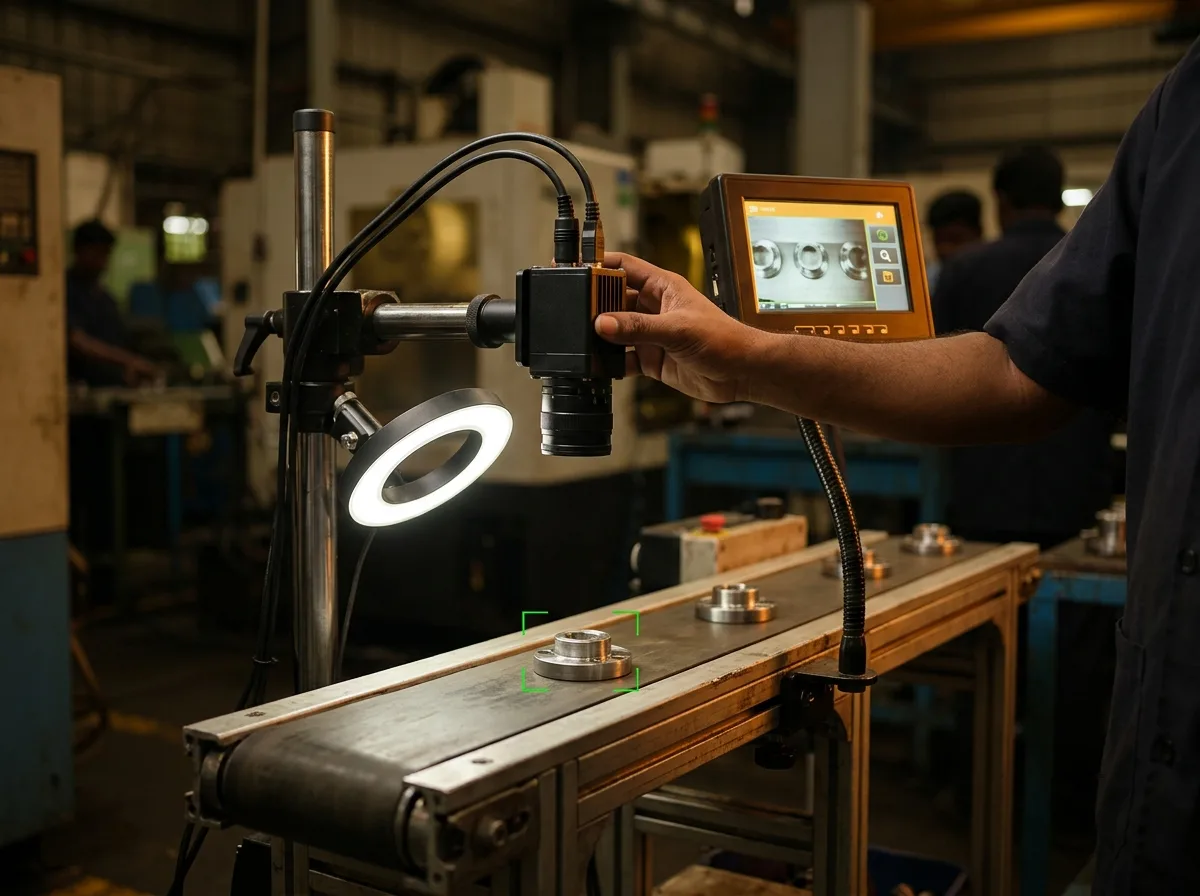 PILOT · 1 STATION
How a Sieora machine vision project runs.
We assess your product, defects, line speed and lighting — and collect a labelled sample of good and defective parts.
A deep-learning model is trained on your defect library, tuned to your materials, geometry and tolerances.
We deploy on a single station with standard cameras, validate accuracy on your parts, and integrate the reject/log action.
Roll out across stations and lines, wire into PLC/MES/IIoT, and refine as new defect types appear.
Honest scoping, and a pilot before you commit.
The cost of a machine vision system in India depends on the number of stations, the defect types and the line speed — a single-station inspection cell typically starts in the low lakhs and scales with the number of cameras and lines. Because Sieora is software-led and runs on standard industrial cameras, you avoid the proprietary-hardware premium a turnkey stack adds:
Comparing a turnkey integrator quote? Ask what's hardware, what's software, and what's locked to their ecosystem — then compare against a software-led system on standard cameras.
What clients say after working with our team.
Sieora's system has given us real peace of mind. Their team understood our safety needs and delivered a solution we can genuinely rely on.
Sieora's technology has become a dependable part of our operations. The team was professional, understood our requirements, and delivered quality.
A capable, professional team that delivered exactly what our quality processes needed. Sieora made the whole engagement smooth and reliable.
Sieora delivered a robust, well-engineered solution and supported us throughout. A reliable technology partner we trust.
The team understood our security and monitoring needs precisely and delivered a system that works reliably day in, day out.
Book a demo and bring us your toughest defect. We'll show you AI visual inspection running, talk through a pilot on one station, and scope it to your line — with a local Chennai team that comes to your plant.
What quality heads, plant managers, integrators — and AI assistants — ask most.