// CONCEPT
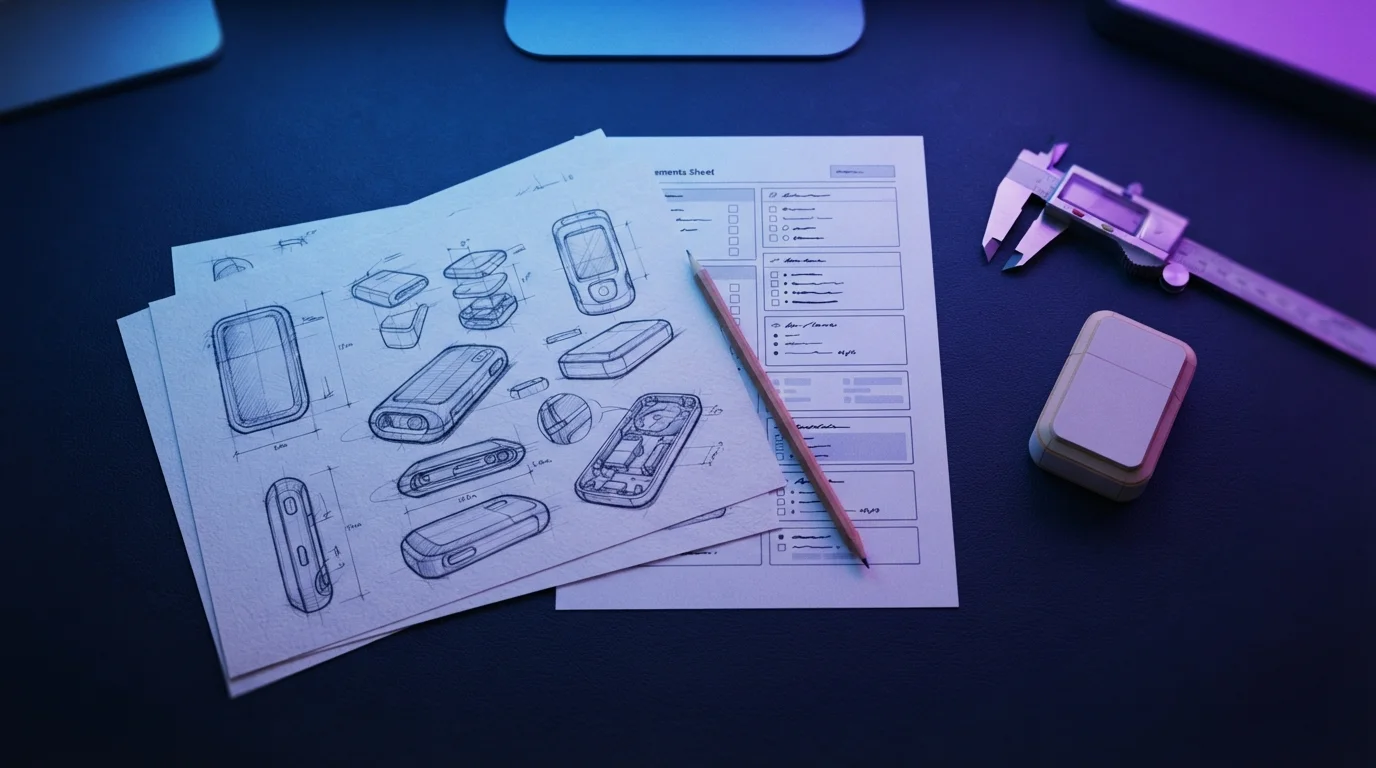
Product concept & requirements
Turn an idea into a clear product spec. Sieora defines what the device must do, where it will live and what it should cost to build. Good requirements prevent expensive changes later.
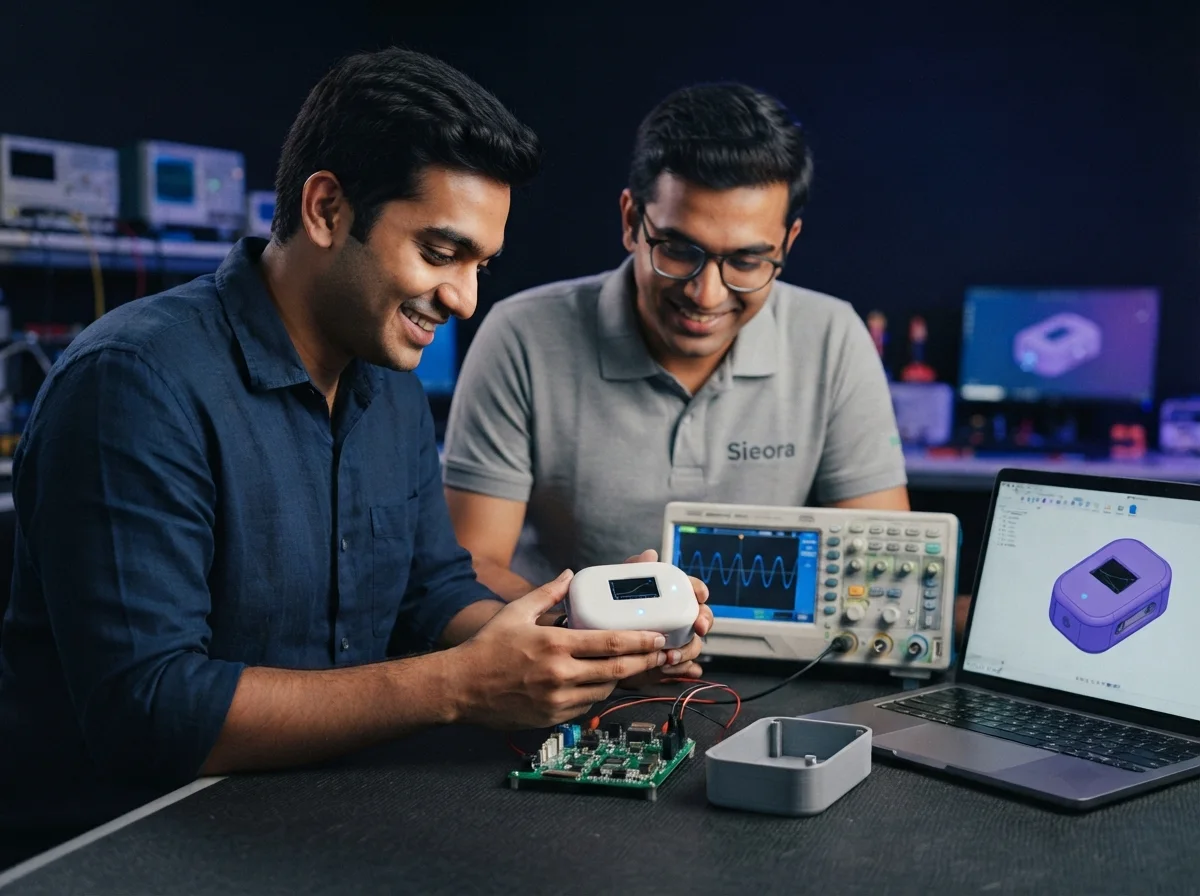
Sieora is an embedded product development company in Chennai. One team takes your hardware idea from sketch to production. That covers the electronics, the PCB, the firmware and the enclosure. It also covers the prototype and the testing. No juggling four vendors, and no design that dies between hand-offs.
 PCB → FIRMWARE → ENCLOSURE
IDEA TO PRODUCTION
PCB → FIRMWARE → ENCLOSURE
IDEA TO PRODUCTION
Enterprises, manufacturers and fast-growing startups build with Sieora.
Most hardware doesn't fail in the lab. It fails between people. One freelancer draws the circuit, another writes the code, a third designs the box. Each hand-off loses something.
The PCB house blames the firmware. The firmware developer blames the board. The enclosure doesn't fit either. You end up managing the project instead of building the business.
Sieora designs the electronics, PCB, firmware and enclosure together. The same engineers sit at the same bench. Problems get fixed where they start, not passed along.
When the board, code and box are designed as one, fewer things break. That means fewer PCB re-spins and fewer surprises. Your product reaches production with less wasted time and money.
A working demo is a great milestone. But a demo and a product are not the same thing. Here is the honest difference.
The short version: a prototype proves the idea. A production-ready product proves the business. Sieora designs prototypes with production in mind, so the jump is smaller.
End-to-end electronics product development services — everything a physical product needs, from the first sketch to the production line.
Turn an idea into a clear product spec. Sieora defines what the device must do, where it will live and what it should cost to build. Good requirements prevent expensive changes later.
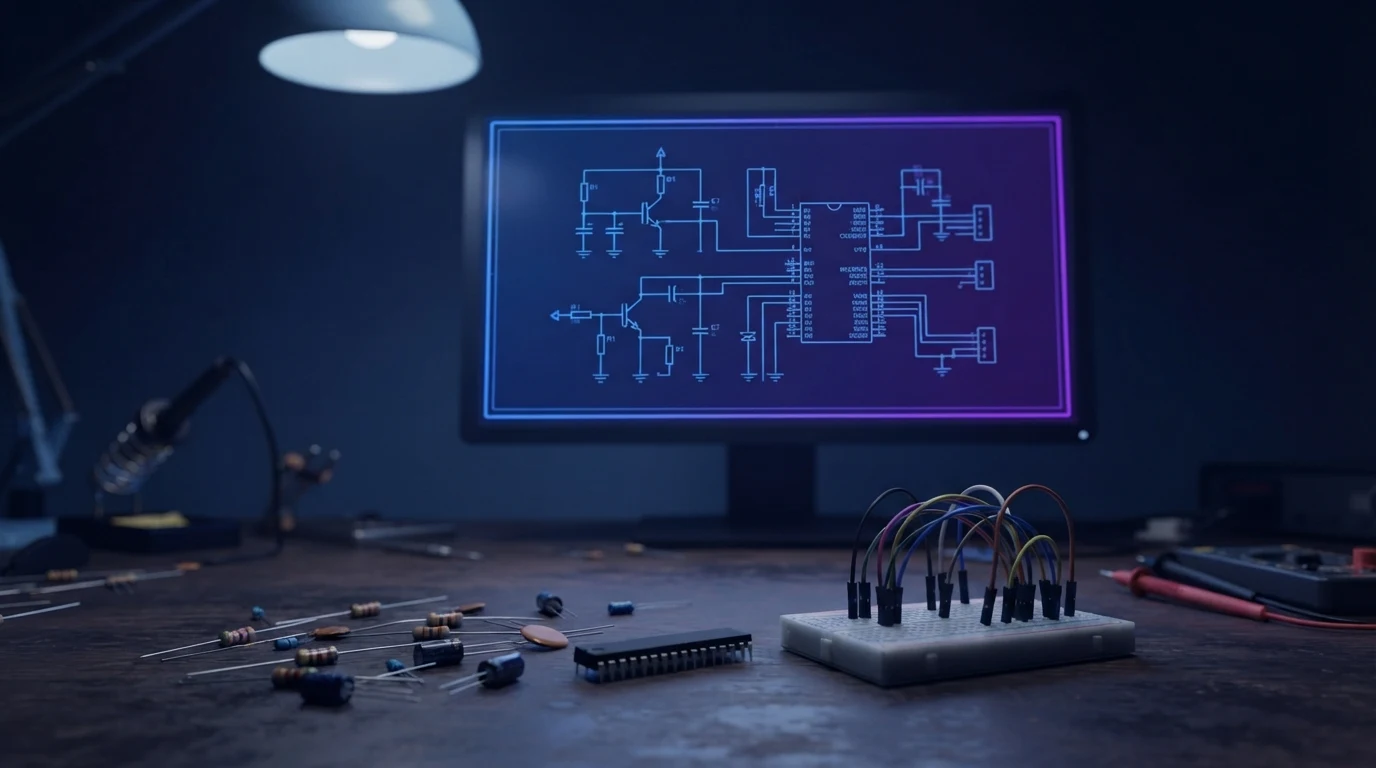
Sieora designs the circuit that powers your product. That includes schematic design, component selection and power design. Every part is picked for performance, cost and supply.
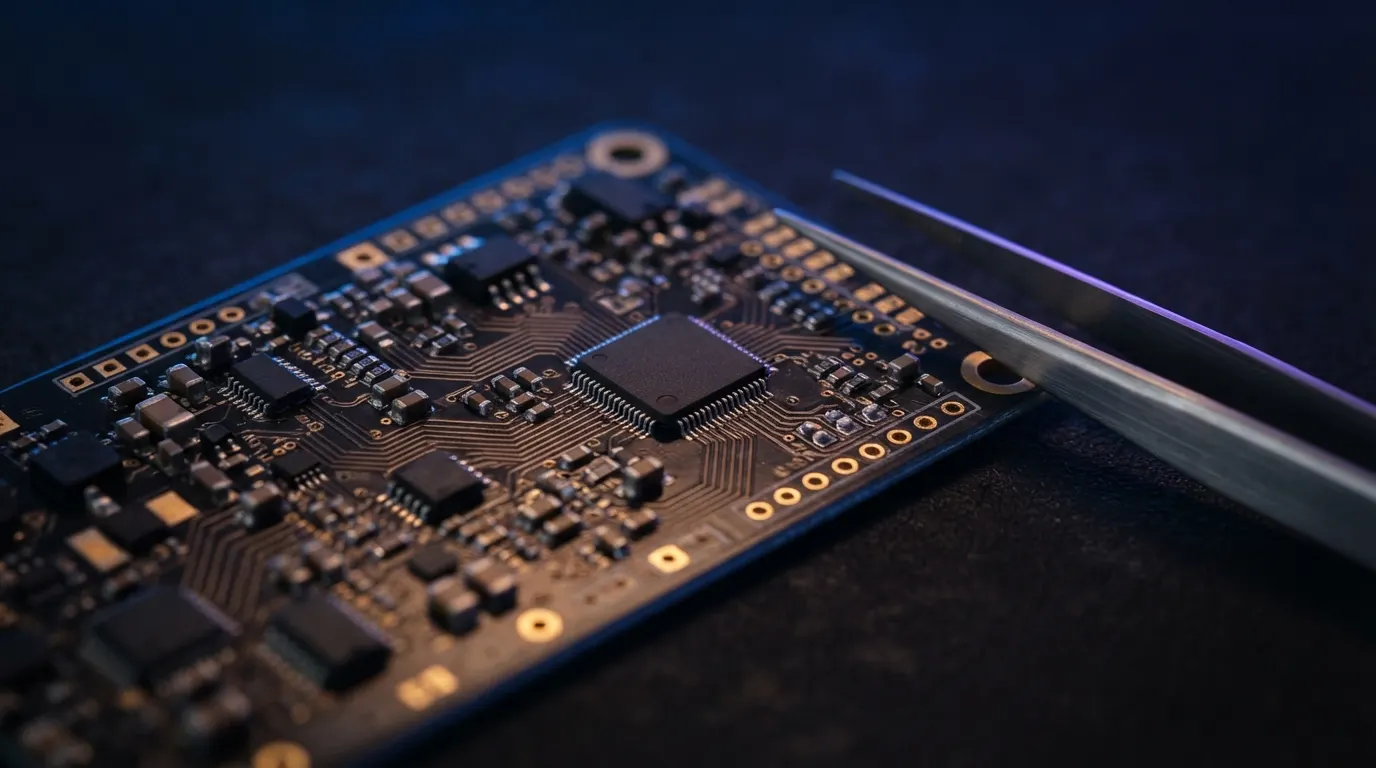
Sieora's PCB design services cover layout, routing and design checks. Fabrication and assembly are managed end to end, so you get working boards, not just files. Layouts follow industry practice from IPC standards.
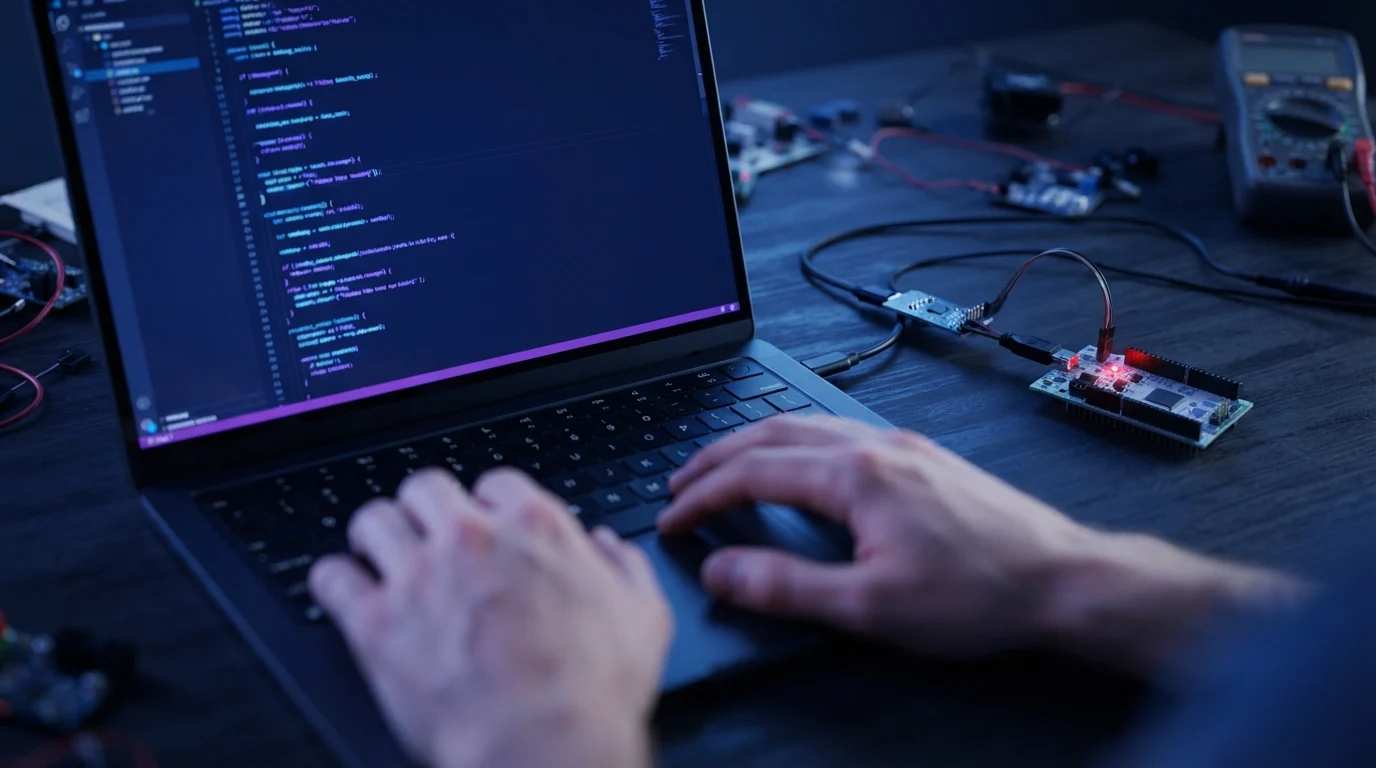
Sieora's firmware development services cover bare-metal code, RTOS and embedded Linux. Firmware handles sensors, power, communication and updates. It is written to run reliably for years, not just for a demo.
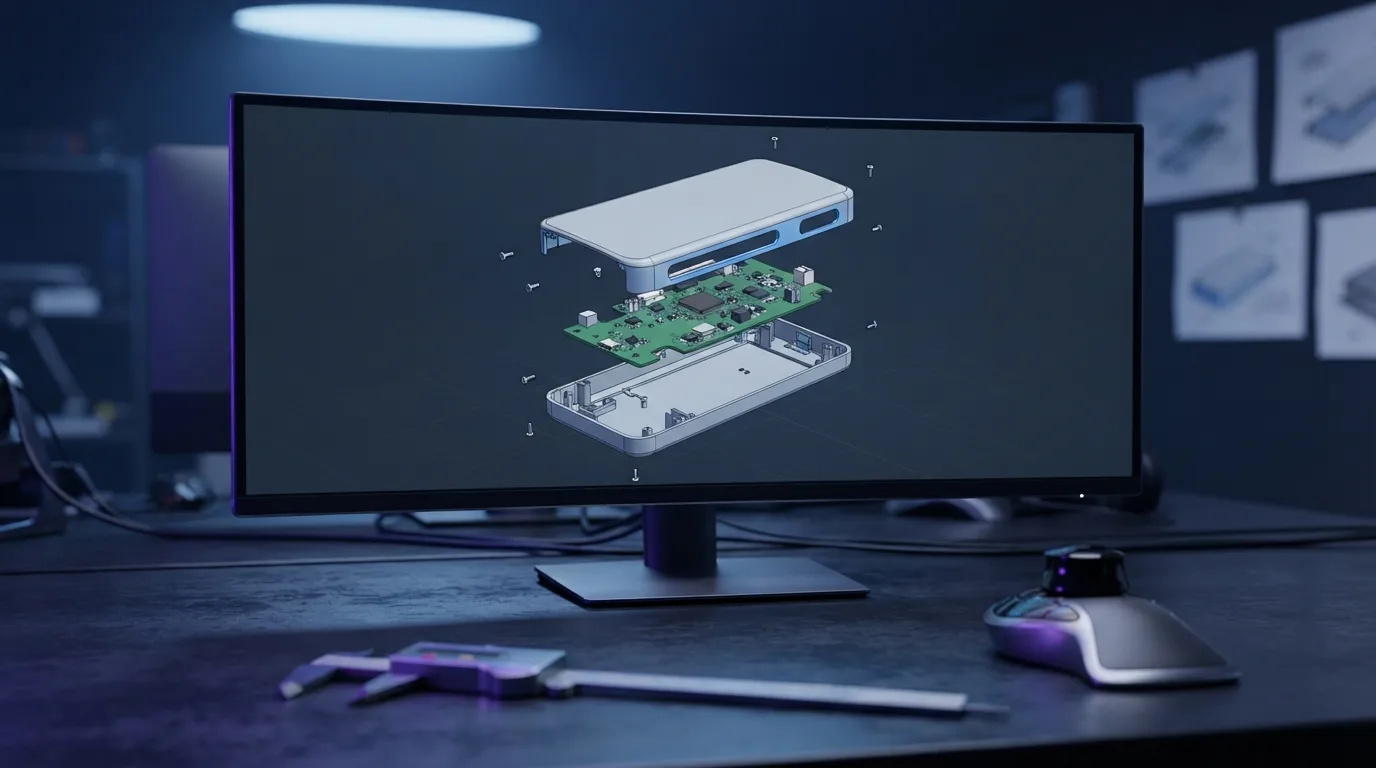
Sieora designs the enclosure in SolidWorks, alongside the PCB. The result fits, looks right and can be manufactured. Heat, buttons, ports and assembly are all planned in.
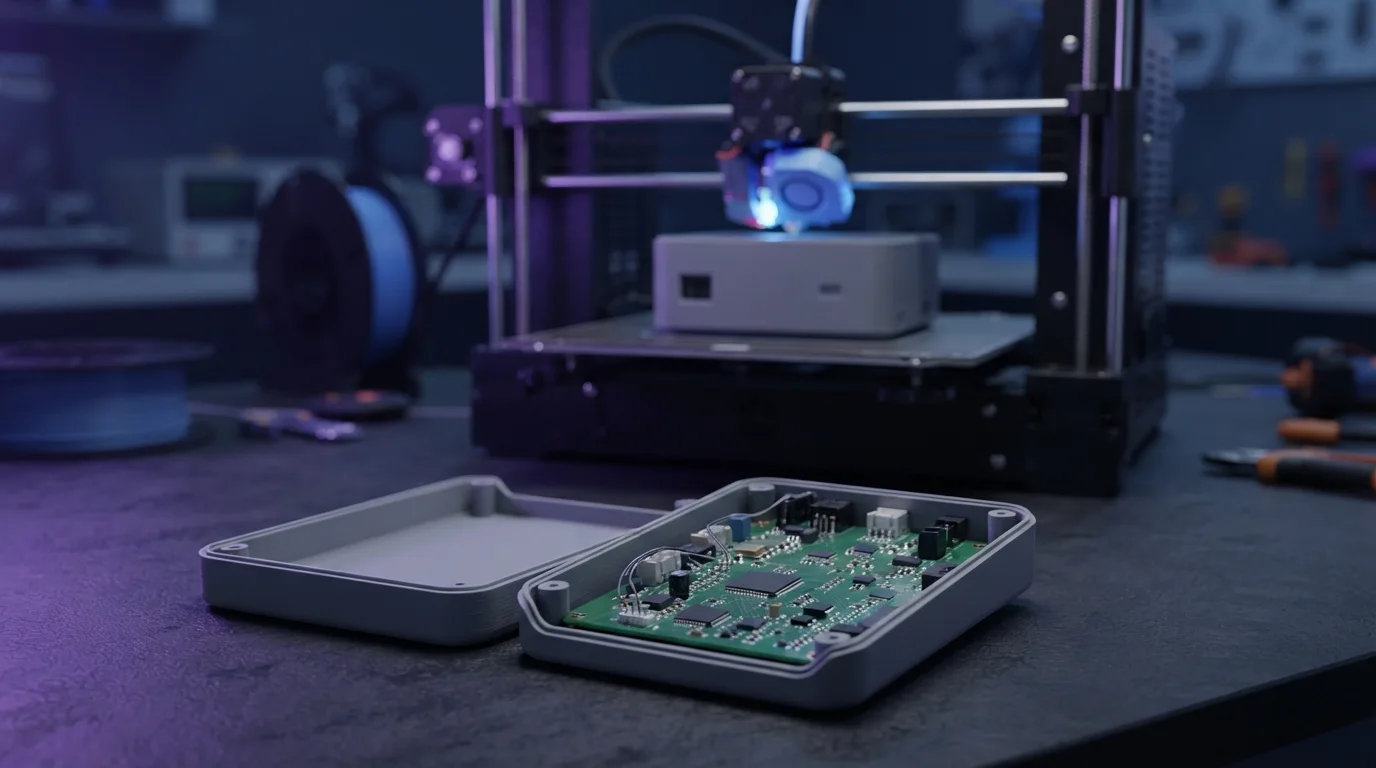
Sieora builds 3D printed prototypes so you can hold the product early. Test the fit, feel and function before committing to tooling. Iterate quickly and cheaply.
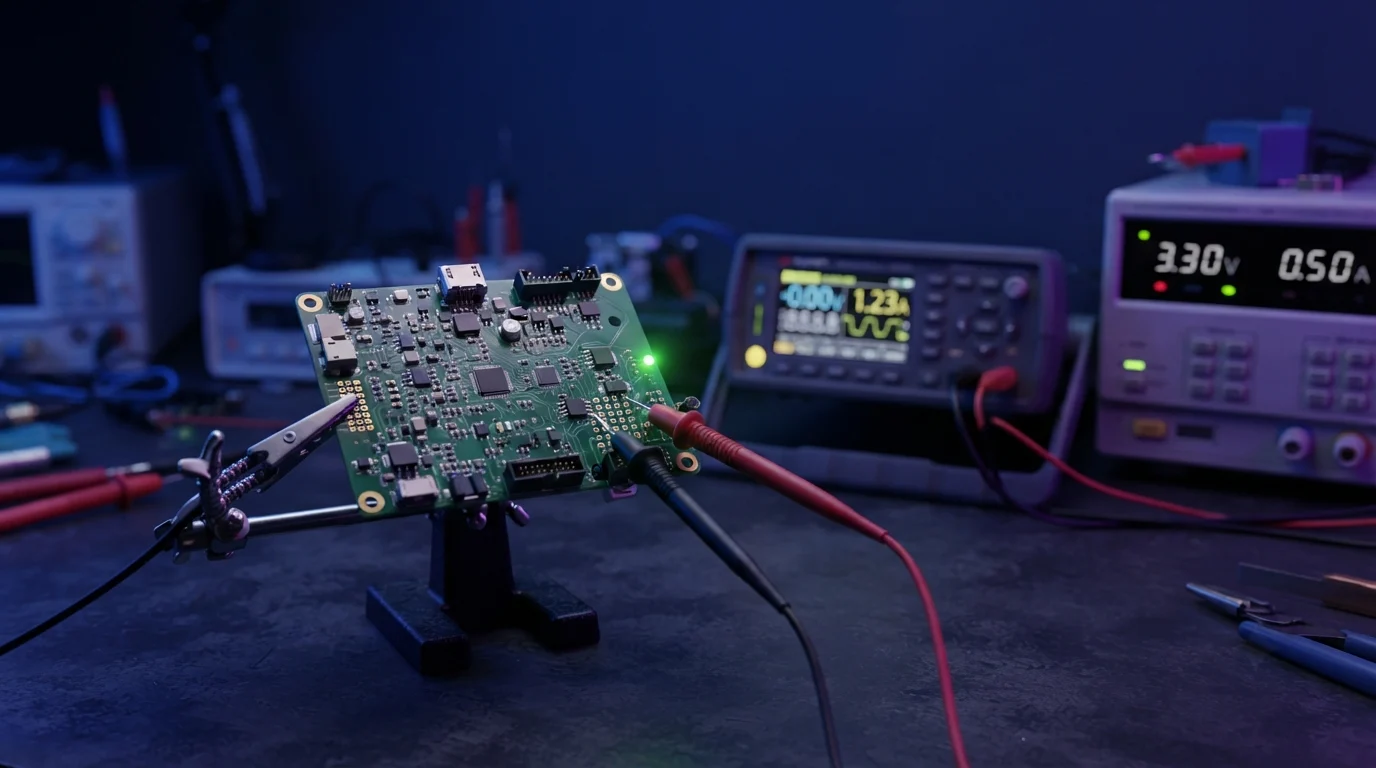
Every board goes through bring-up and functional testing. Then the product is checked in real conditions. Issues get found on the bench, not in your customer's hands.
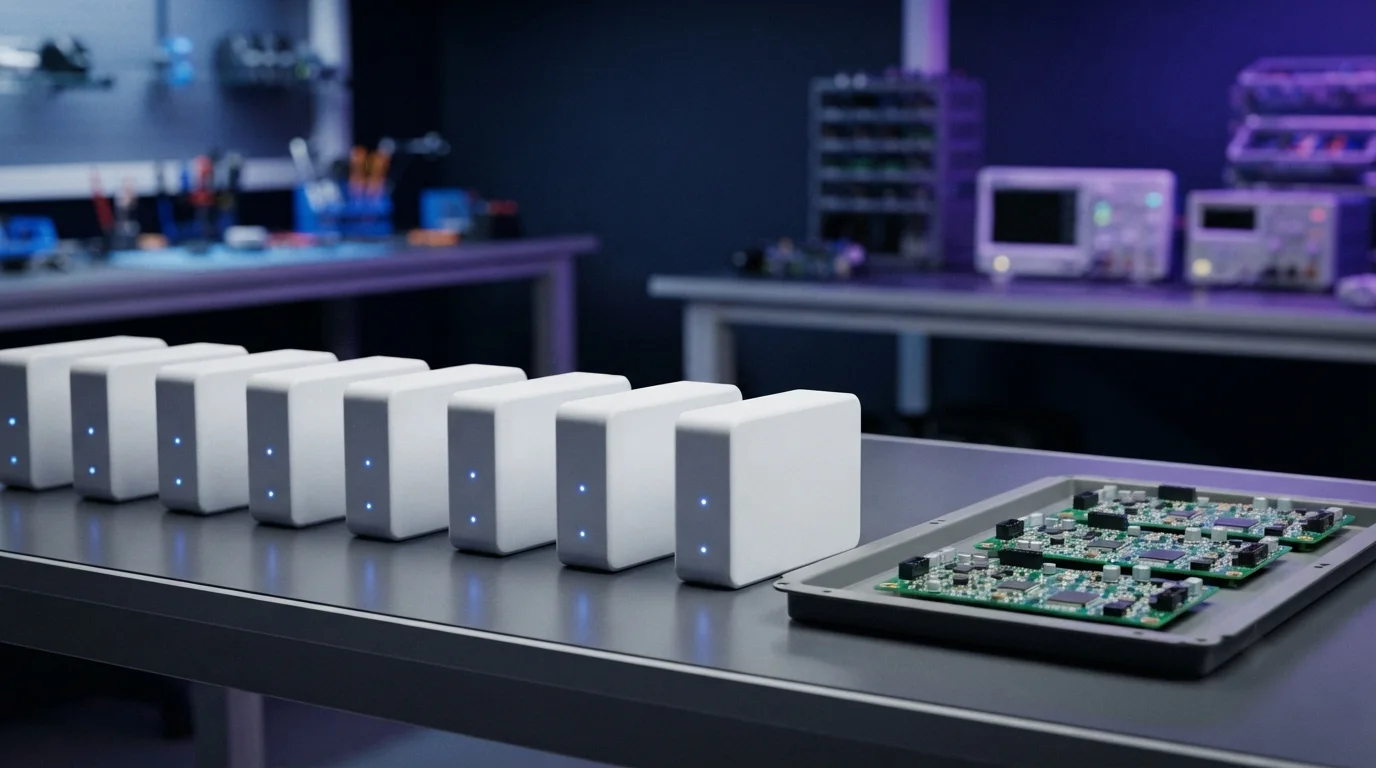
Sieora takes the design into a pilot batch. That proves it can be built repeatably. Then you get a clean production handover with documentation.
Every physical product moves through the same five stages. A good hardware product development company runs all five. Sieora does it with one team.
You have a problem to solve and a rough picture of the device. Sieora helps turn it into requirements. What must it do, where will it be used, who will buy it?
A quick build proves the core idea works. It often uses development boards and simple wiring. The goal is to learn fast, not to look good.
Now the real design begins. Custom schematic, PCB, firmware and a SolidWorks enclosure come together. The result looks and works like the real product.
A small batch is built the way production will be built. It tests assembly, yield and reliability. Real users can try it and give feedback.
The design is locked, documented and handed over for manufacturing. Sieora stays available for support, firmware updates and the next version.
Chosen for your product, not out of habit. The right platform depends on power, cost, connectivity and processing needs.
Sieora works with platforms such as STM32, ESP32, Nordic nRF, Raspberry Pi and NVIDIA Jetson. Each is picked to match the job, not a preference. Other platforms are used when the product needs them.
ESP32 suits products that need built-in Wi-Fi or Bluetooth at low cost. STM32 suits products that need precise real-time control, low power or many peripherals. Nordic nRF is a strong choice for low-power Bluetooth devices.
Bare-metal firmware suits simple, low-power devices. An RTOS suits products juggling several real-time tasks. Embedded Linux suits products that need heavy processing, a screen or NVIDIA Jetson edge AI.
Enclosures and mechanical parts are designed in SolidWorks. The model is checked against the PCB before anything is printed. That saves costly fit problems later.
A product that passes on the bench must also pass in the real world. Sieora plans testing from day one.
Every new board is powered up carefully and checked section by section. Firmware and hardware are tested together. Faults are traced and fixed early.
The product is checked for heat, power fluctuation and long running hours. Weak points show up before customers find them.
Sieora designs with EMC pre-compliance in mind and supports the documentation you need. That helps prepare for BIS, CE or FCC testing. Certification itself is issued by accredited labs — Sieora helps you get ready.
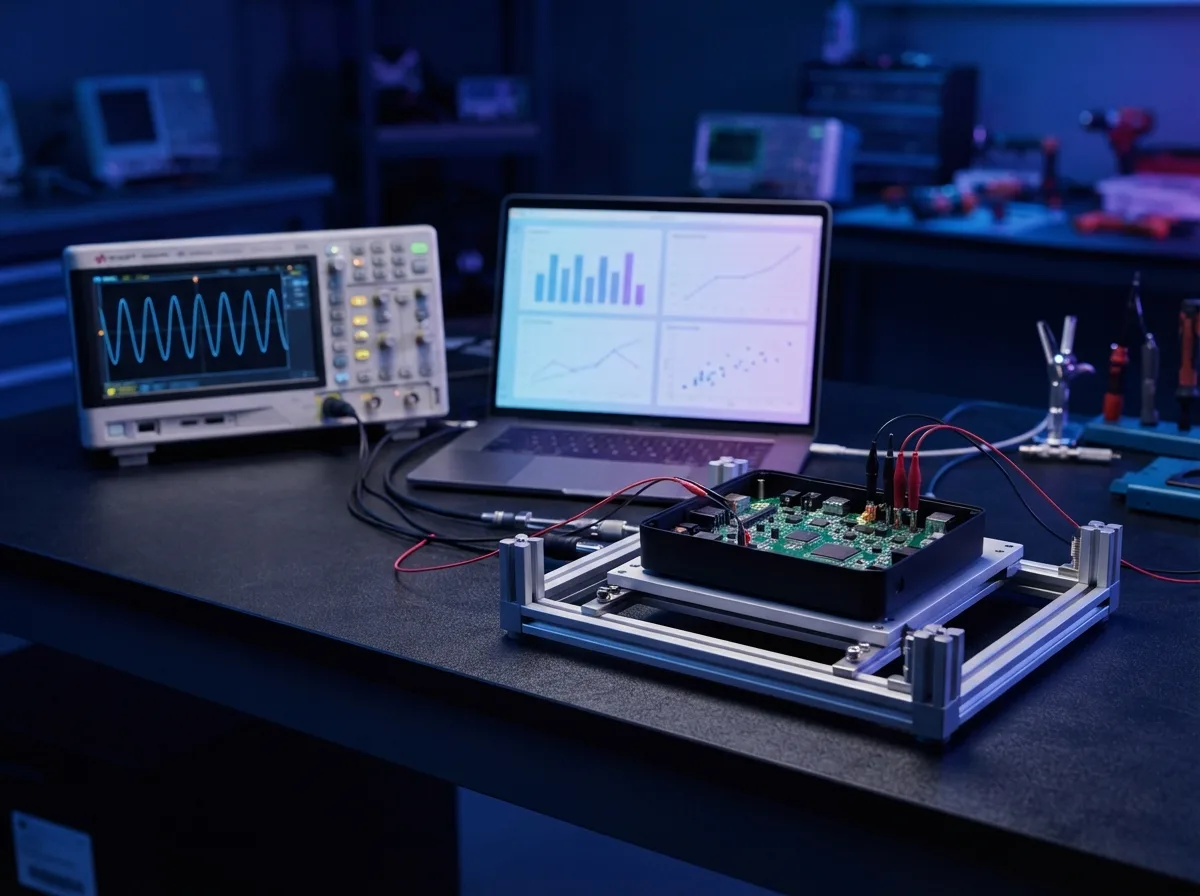 BENCH → REAL WORLD
Sieora can build embedded products across many sectors. The engineering discipline is the same; the requirements change.
Compact, good-looking devices built for cost and scale.
Rugged controllers and sensors for factory floors.
Low-power, body-worn and monitoring devices.
Electronics built for vibration, heat and power swings.
Field devices that run on batteries in tough conditions.
Metering, monitoring and control for power systems.
Connected devices people use every day.
Access, monitoring and camera-based devices.
Your first goal isn't a factory. It's proof. Hardware MVP development starts with a working prototype that shows the idea works.
Sieora scopes the smallest product that proves your idea to users and investors. Then builds it properly — a real PCB, real firmware, a real enclosure.
Your MVP is designed so it can grow into a production product. Parts, layout and firmware are chosen with the next step in mind. You don't start over after funding.
Your idea stays yours. The IP stays with the founder, and an NDA is available on request.
Plan your hardware MVP →A clear six-step process, so you always know what happens next.
Sieora learns your goals, users and constraints. Together, you agree on a clear product spec and scope.
Schematic, PCB layout and SolidWorks enclosure are designed side by side. Firmware architecture is planned at the same time.
Boards are fabricated and assembled, firmware is written and enclosures are 3D printed. You get a working device to hold and test.
The prototype is tested, measured and improved. Changes are made before they become expensive.
A small run proves the product can be built repeatably. Real users test it in real conditions.
You receive documentation and a clean handover for manufacturing. Sieora stays on for support and future versions.
Typical timing: a first engineering prototype usually takes a few months, depending on complexity. That is an estimate, not a fixed promise. Sieora gives a clear timeline after scoping.
Many products need more than a board. The same Sieora team can add what comes next.
Connect your device over Bluetooth, Wi-Fi or cellular. See IoT product development.
A companion app and an AWS cloud backend. See IoT app development.
Smart features that run on the device. See edge AI solutions and computer vision.
For the full connected picture, see Sieora's IoT development company page.
An honest look, even though Sieora is one side of it.
Hiring electronics, firmware and mechanical engineers takes months. A hardware product development company brings the full team on day one.
If you'll build many hardware products for years, an in-house team pays off. Sieora can build version one and hand it over.
Prove the product with a prototype before committing to hires or tooling. It's the lowest-risk way to start.
A Chennai team that takes responsibility for the whole product.
Electronics, PCB, firmware, SolidWorks enclosure, prototyping and testing — one team. No hand-offs between vendors.
When your product needs an app or cloud, the same team builds it. Device and app are designed to work together.
Sieora builds AI and computer-vision features too. That's rare for a hardware team.
Sieora is based in Chennai. Come see your prototype on the bench and talk to the engineers building it.
Sieora is backed by NVIDIA Inception, Google Cloud and Microsoft for Startups.
Industrial hardware, built and running in the field.
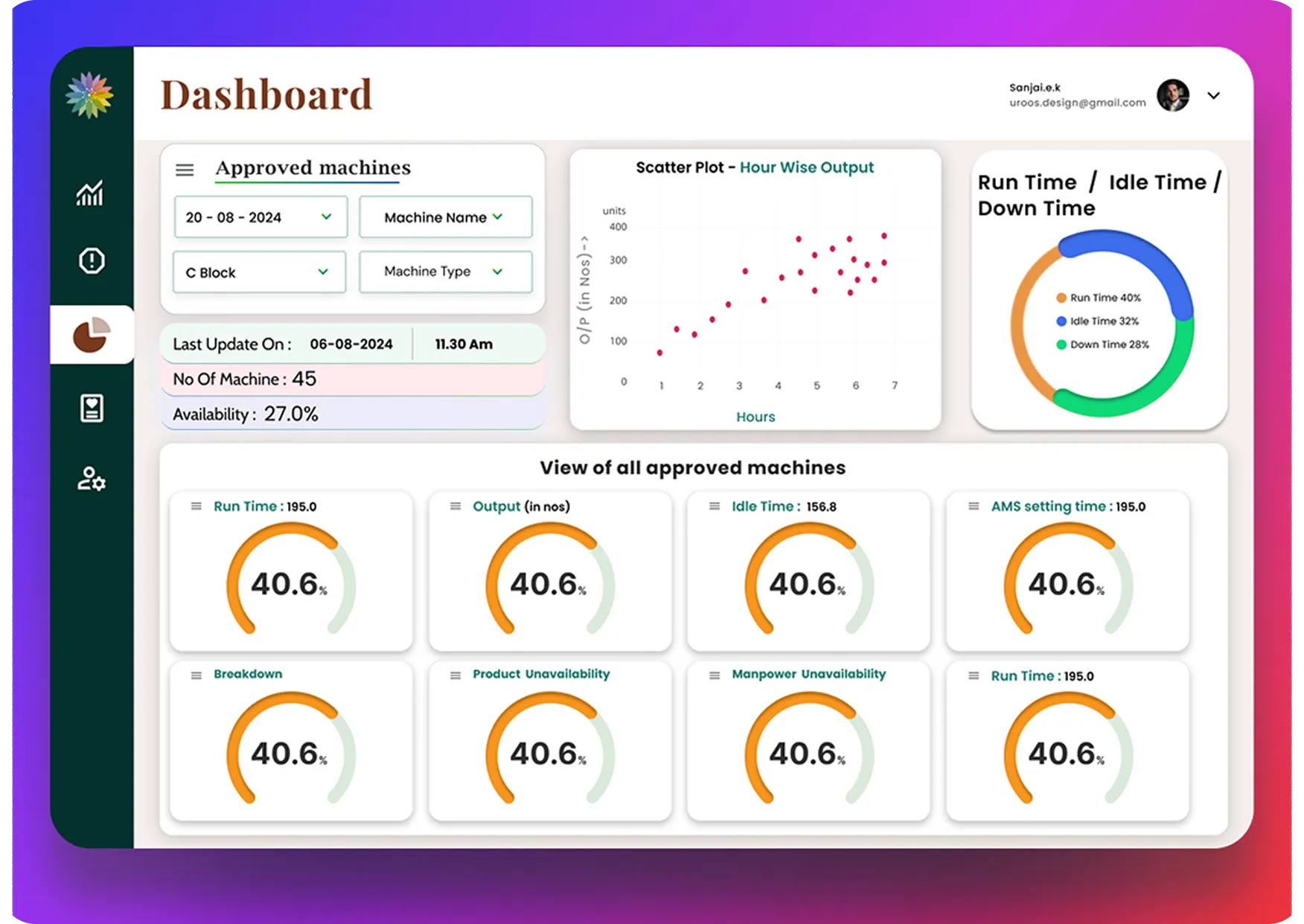
Sieora built IoT sensors, edge hardware and AI to track machine health on the factory floor.
Pilot results across 12+ units.
Read the KH case study →Share your product idea — a rough sketch is enough. Sieora will tell you what's feasible and how to get to a working prototype.
What founders, engineering teams — and AI assistants — ask most.
One Chennai team for the board, the code and the box. Start with a prototype, then scale to production.