★★★★★
Sieora's system has given us real peace of mind. Their team understood our safety needs and delivered a solution we can genuinely rely on.
Head of Safety OperationsNippon Paint India

Sieora's garbage detection software turns the street CCTV a city already has into an always-on watch on dumping hotspots — spotting illegal dumping, littering and garbage accumulation, and alerting municipal teams in real time with geo-tagged evidence. This is AI waste detection built for enforcement: illegal dumping detection that also reads the offending vehicle's number plate, so a cleanup alert becomes a challan. One garbage detection system for streets, parks, factories and hospitals, across India and worldwide — no garbage-truck cameras, just your existing feeds.
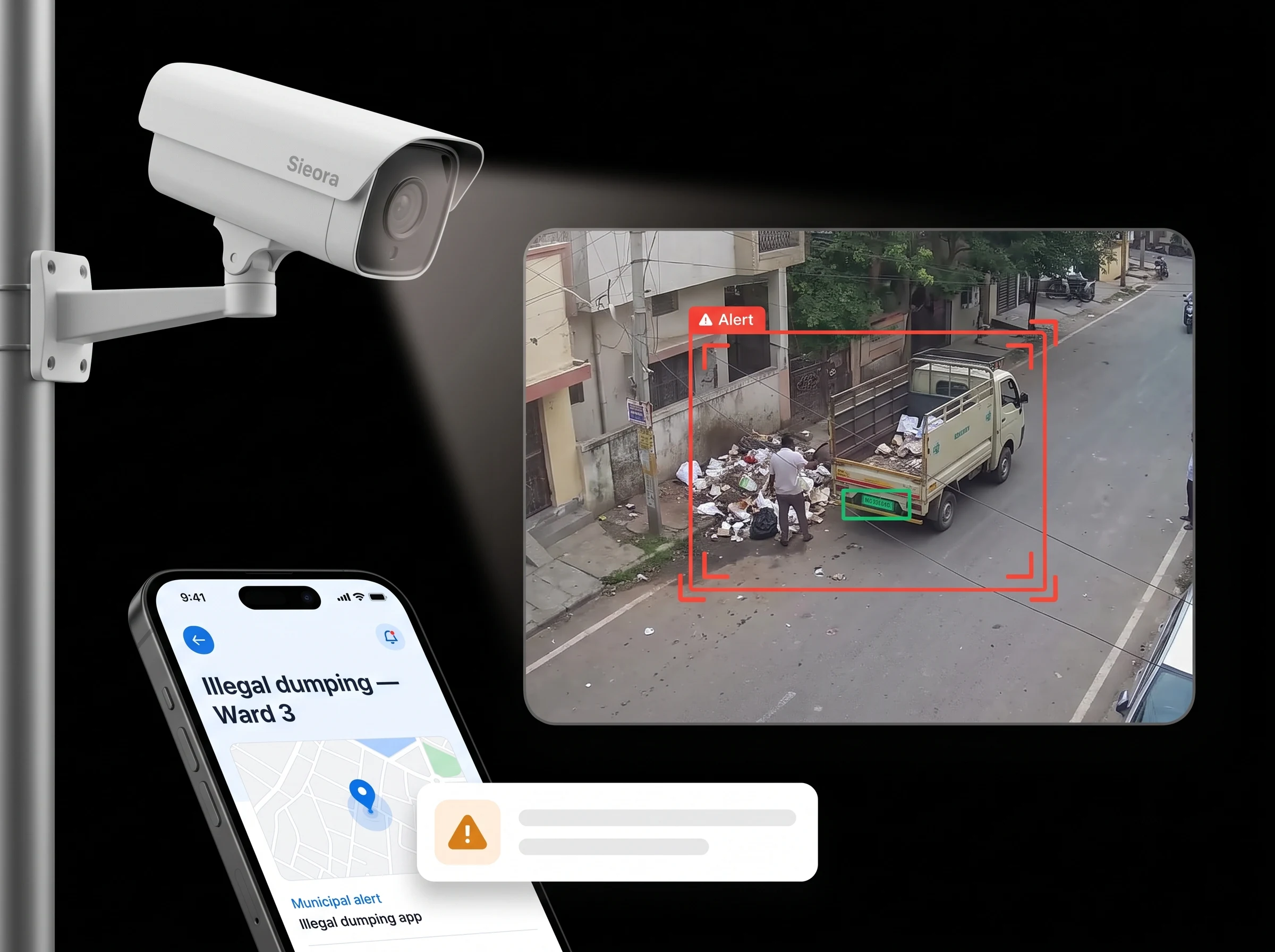 DUMPING ✗ HOTSPOT
PLATE · CAPTURED
DUMPING ✗ HOTSPOT
PLATE · CAPTURED
Enterprises, manufacturers and fast-growing startups build with Sieora.



























Every city has them — the corner, the vacant plot, the underpass where waste piles up overnight. You clear it, and it's back by morning. Manual inspection never catches who did it, and without evidence there's no challan.
Sanitation staff can't watch every hotspot around the clock — dumping happens at night and in the gaps.
Without a timestamped clip and the vehicle's plate, offenders can't be fined — so the dumping never stops.
Persistent dumping drives resident complaints and drags down cleanliness rankings the city is judged on.
Most systems tell you there's a mess. Sieora tells you who made it — turning cleanup into enforcement.
Every detection is stored with location, time and a clip — the audit-ready evidence a municipality needs to defend a challan and track a hotspot over time.
Alerts and evidence can feed an Integrated Command and Control Centre, so control-room staff act on dumping the same way they act on any other city incident.
Waste events, zone by zone — alerts fire only in the restricted or no-dumping areas you define.
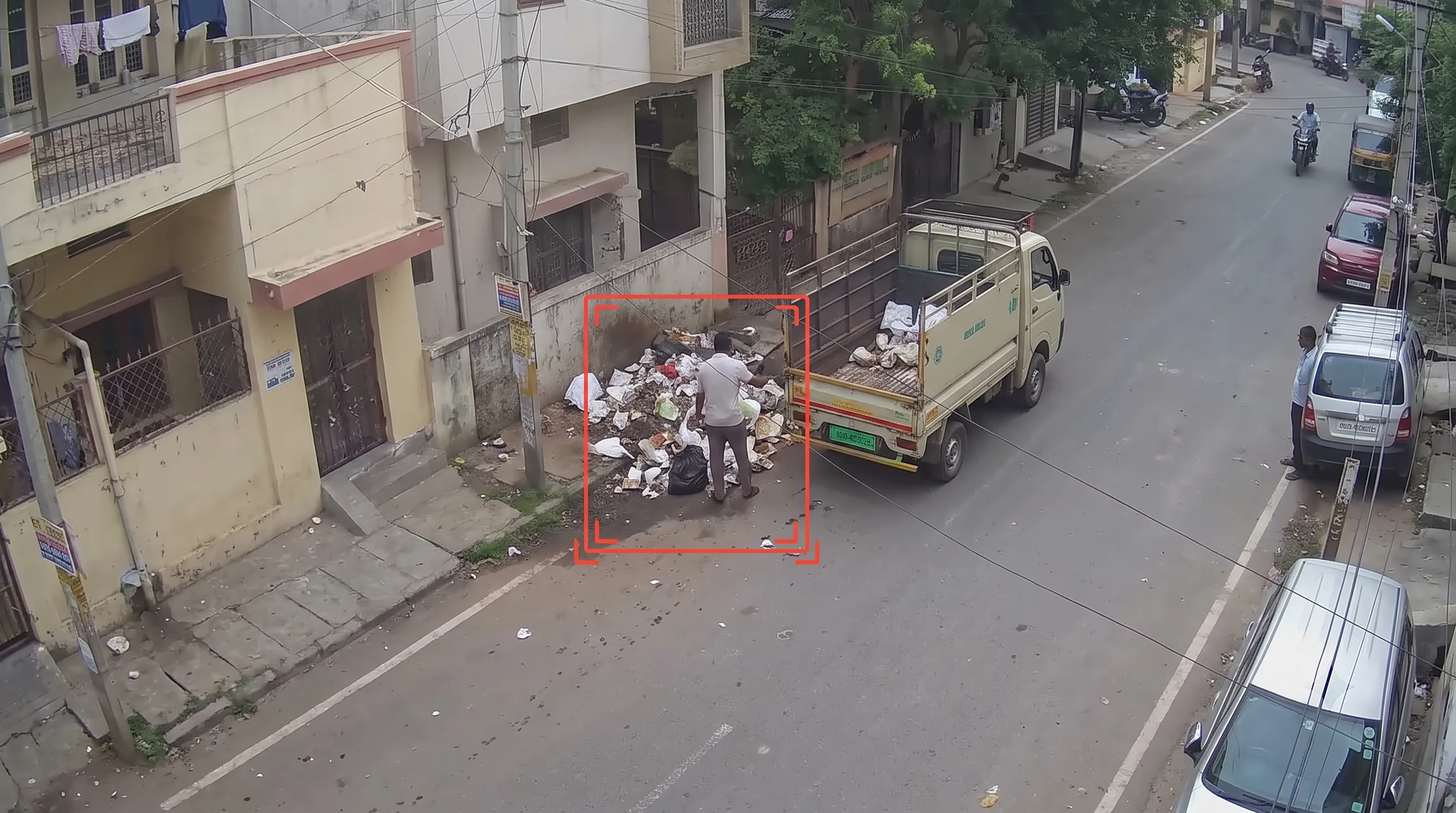 DUMPING ✗
Detects a person or vehicle dumping waste or bulky items in a restricted area, day or night.
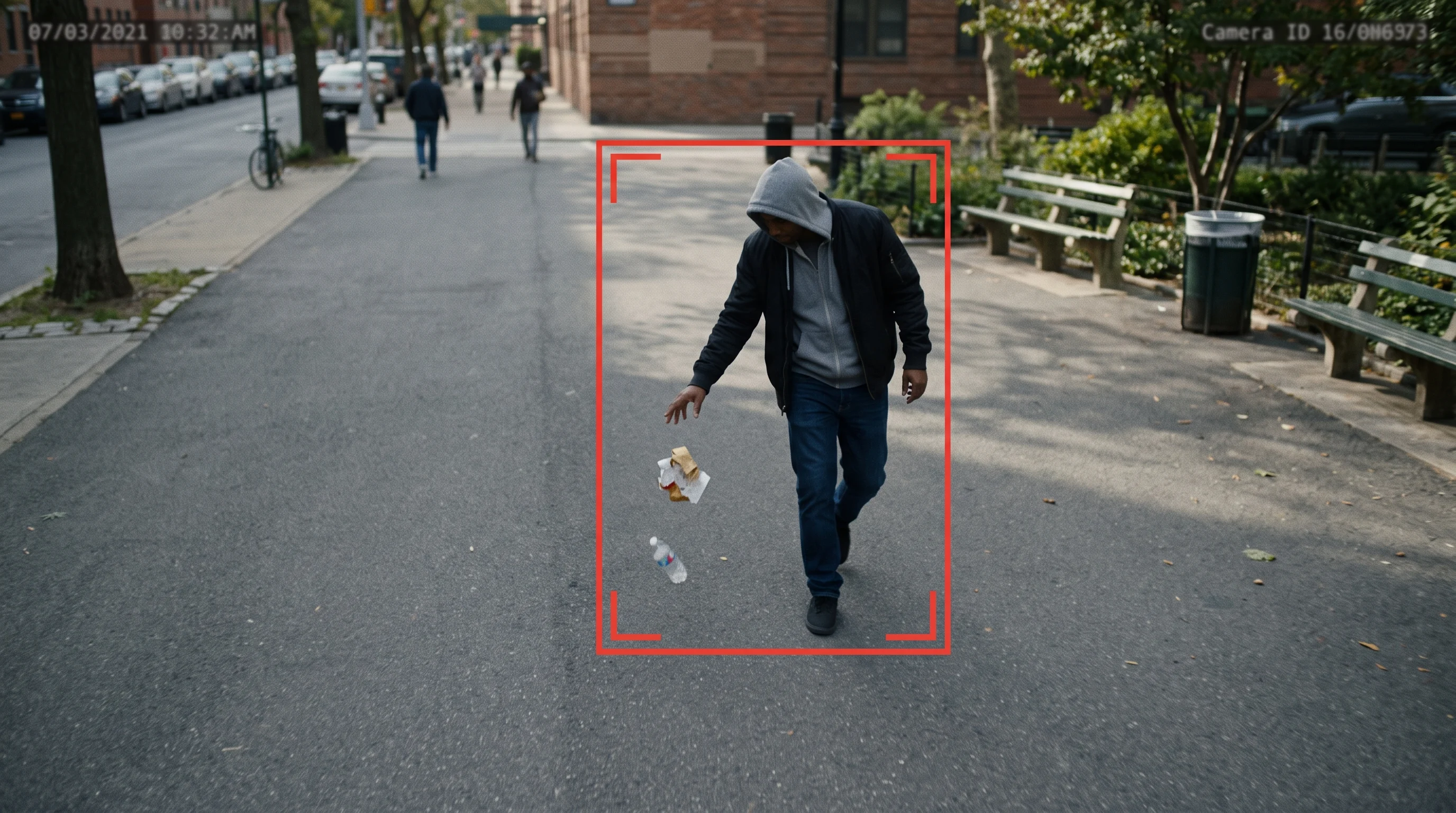 LITTERING ✗
Flags people discarding litter — bottles, bags, packaging — in public spaces and no-litter zones.
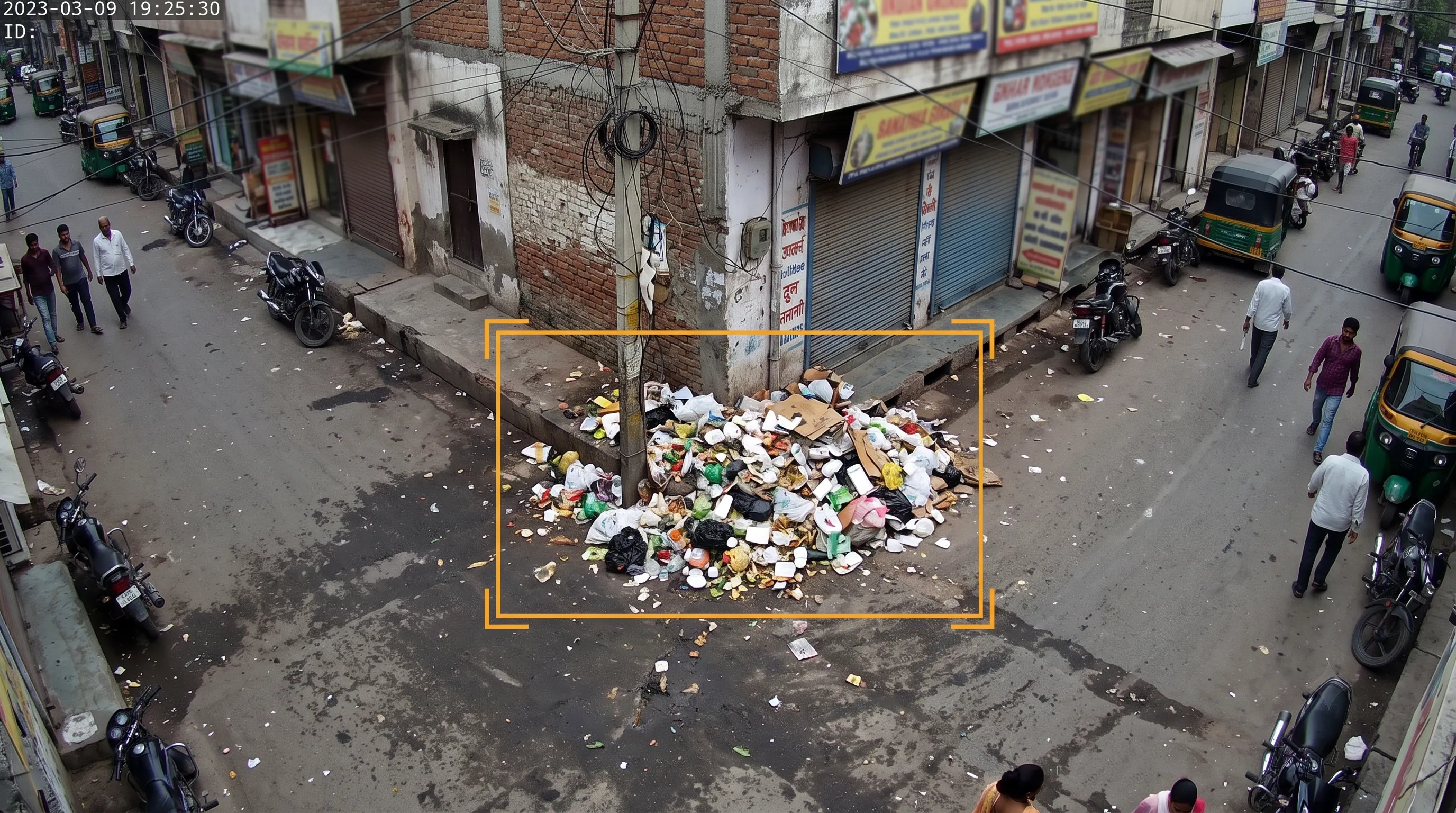 ACCUMULATION
Spots waste building up at a sanitation hotspot so crews are dispatched before it becomes a pile.
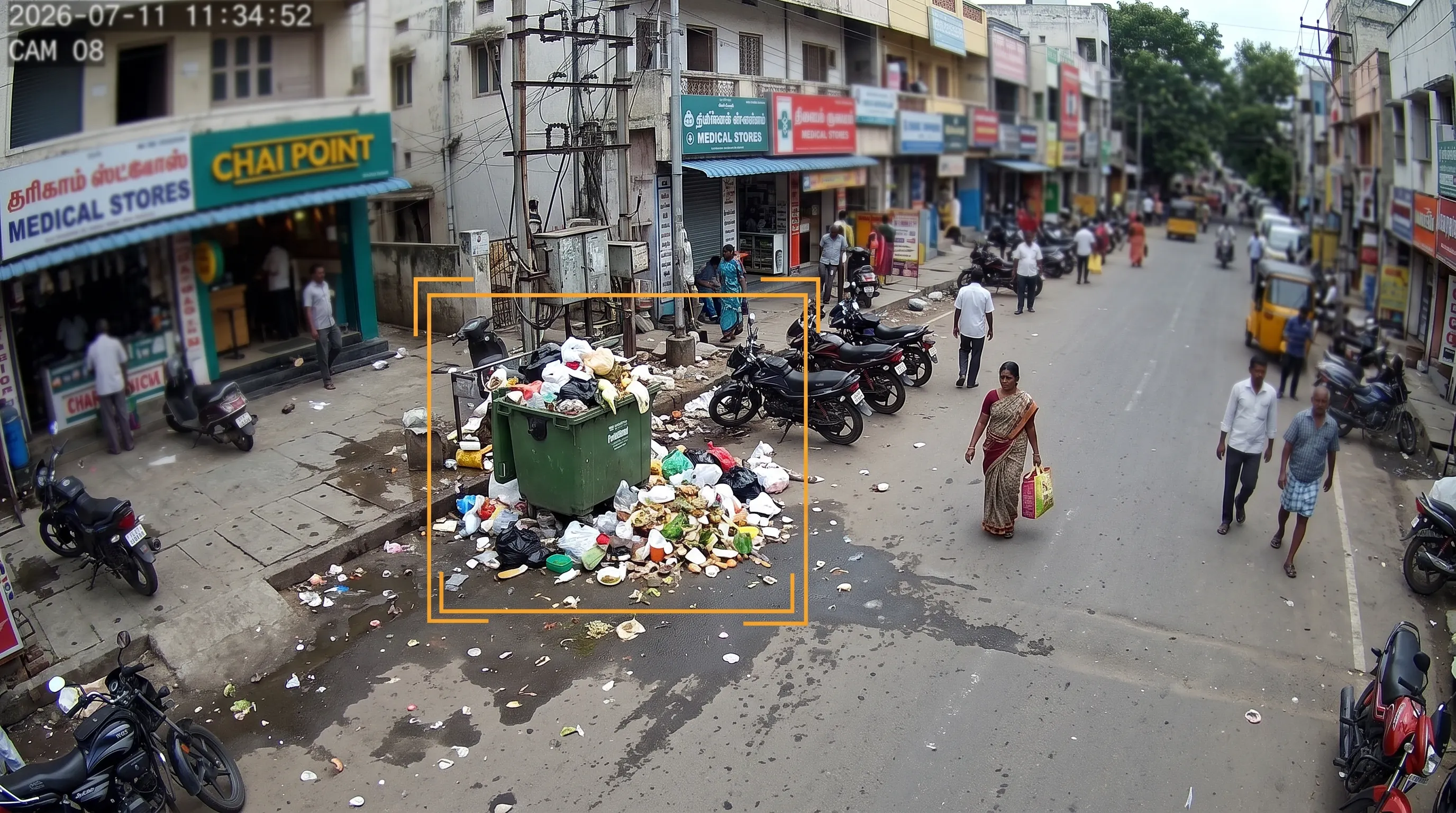 OVERFLOW
Detects when public bins overflow so collection is triggered by need, not a fixed schedule.
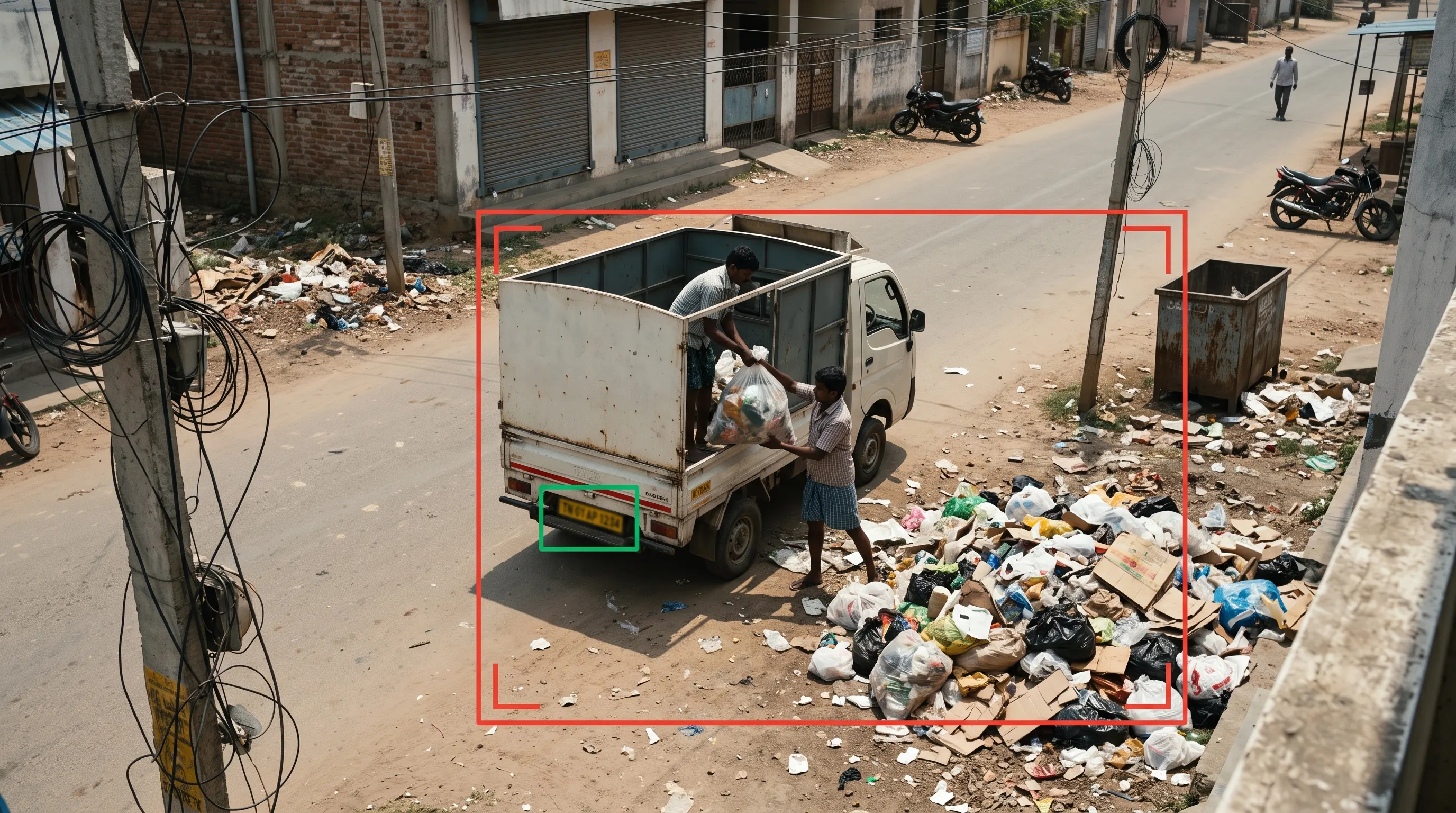 VEHICLE · PLATE
Reads the number plate of the vehicle involved in dumping (ANPR), for challan-ready enforcement.
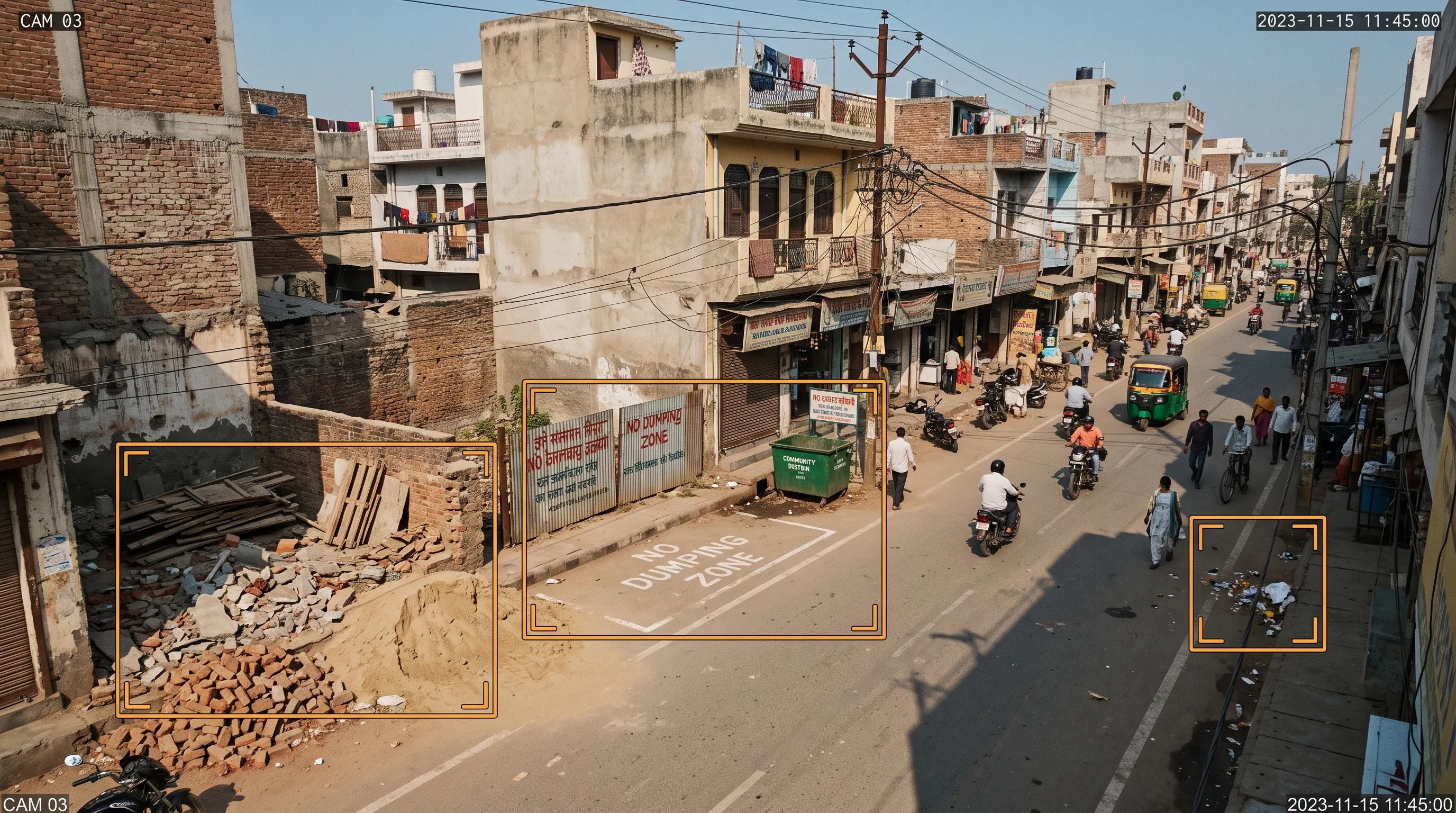 + CUSTOM
Need a specific hotspot, waste type or restricted zone — construction debris, biomedical bags? We tune it to your site.
Every ward has its own dumping spots and waste types. If a camera can see the zone, we can detect the violation — tuned to your hotspots, waste types and enforcement workflow.
Request Custom Detection →On city streets, parks and markets, illegal dumping detection watches your known hotspots on existing CCTV and alerts sanitation teams the moment waste is dumped — with the geo-tagged clip and, where the angle allows, the vehicle plate needed to act.
It's the same municipal buyer and cameras as the rest of your smart-city stack, so it slots into an existing deployment.
Part of your smart city analytics; enforcement via ANPR.
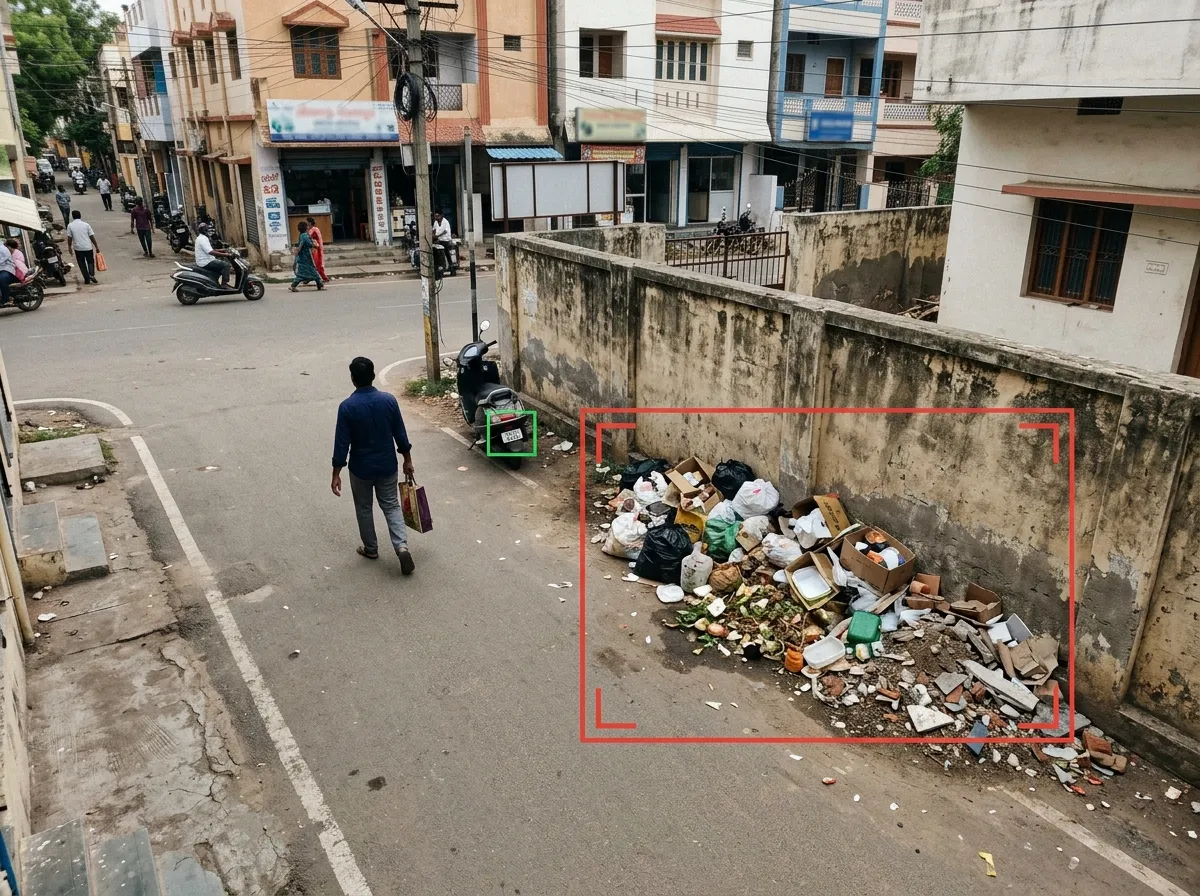 DUMPING ✗ STREET
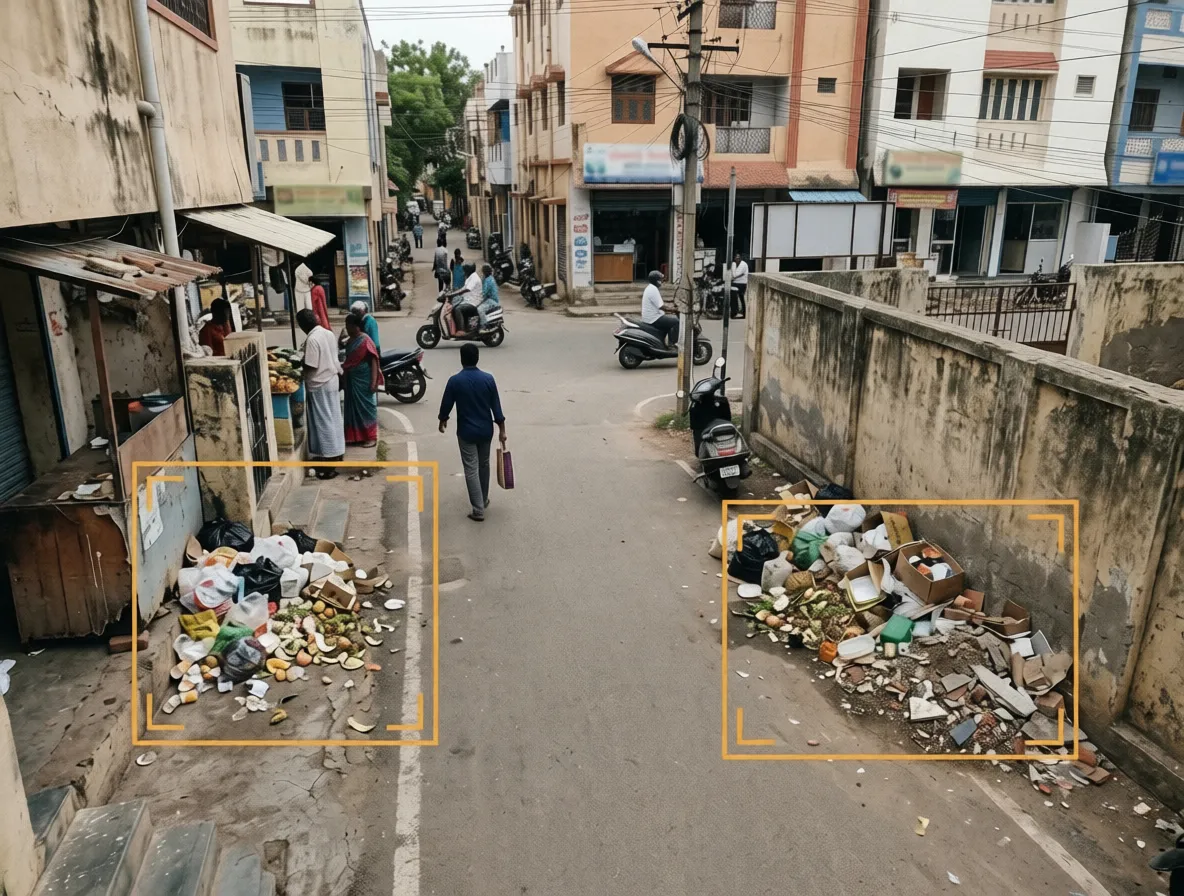 ACCUMULATION
Beyond single dumping events, litter detection and garbage accumulation monitoring track where waste steadily builds up — so crews are dispatched by need and you can see which wards and hotspots need targeted intervention.
Camera-based, on your existing feeds — no bin sensors or truck cameras to install.
The same garbage detection works inside facilities — turning existing cameras into a compliance watch on how and where waste is disposed.
Detect improper waste disposal in production and storage areas, keeping sites safe and audit-compliant.
Flag biomedical or hazardous-waste violations in the wrong zones, protecting staff, patients and compliance.
Maintain hygiene standards by catching littering and waste build-up in guest and service areas quickly.
Every violation is logged with zone, time and a clip — evidence for inspections and internal accountability.
A detection only helps if it reaches the right team with the evidence to act.
Push a real-time alert with clip and location to sanitation teams, control room, app, SMS or WhatsApp.
Trigger collection by need — overflowing bins and building accumulation raise their own alerts.
A dashboard of waste management video analytics shows dumping by ward, hotspot and time to target action.
The same fly-tipping detection serves councils outside India — illegal dumping is a global civic problem.
Sieora runs on the IP and CCTV cameras, NVRs and VMS a city already has over RTSP/ONVIF — no garbage-truck cameras, no proprietary hardware. Clear sightlines of the hotspot matter more than the camera brand.
No — any ONVIF camera with a clear view of the hotspot works. A readable angle on the approach road helps capture the vehicle plate; we confirm placement in a quick site check.
From a live camera feed to a challan-ready evidence pack — in near real time.
Securely ingests streams from your existing cameras at the dumping hotspots you want to watch.
AI detects the dumping event and, where the angle allows, reads the vehicle's number plate.
Saves a geo-tagged, timestamped clip and still — the audit-ready record for a challan.
Pushes the alert and evidence to your team or ICCC to dispatch cleanup and issue a fine.
Indian cities are already tendering exactly this — CCTV at dumping hotspots plus AI to detect illegal disposal and issue challans through the command centre. Sieora fits that model: it aligns with Swachh Bharat cleanliness goals and clean-air programmes, works with your Urban Local Body infrastructure, and feeds an Integrated Command and Control Centre.
Works with your system integrator on Smart Cities Mission and municipal projects.
 ICCC · LIVE
We'd rather set the right expectation than over-promise:
On known dumping spots with clear camera sightlines, detection is reliable day and night.
Capturing a usable plate needs a readable angle, distance and lighting on the approach — not every scene allows it.
It provides detection and evidence; the challan is issued through your civic process.
Published research on similar YOLO-based systems reports around 97% dumping-detection accuracy day and night — a strong benchmark, but the number that matters is accuracy on your hotspots, which we prove in a pilot before you scale city-wide.
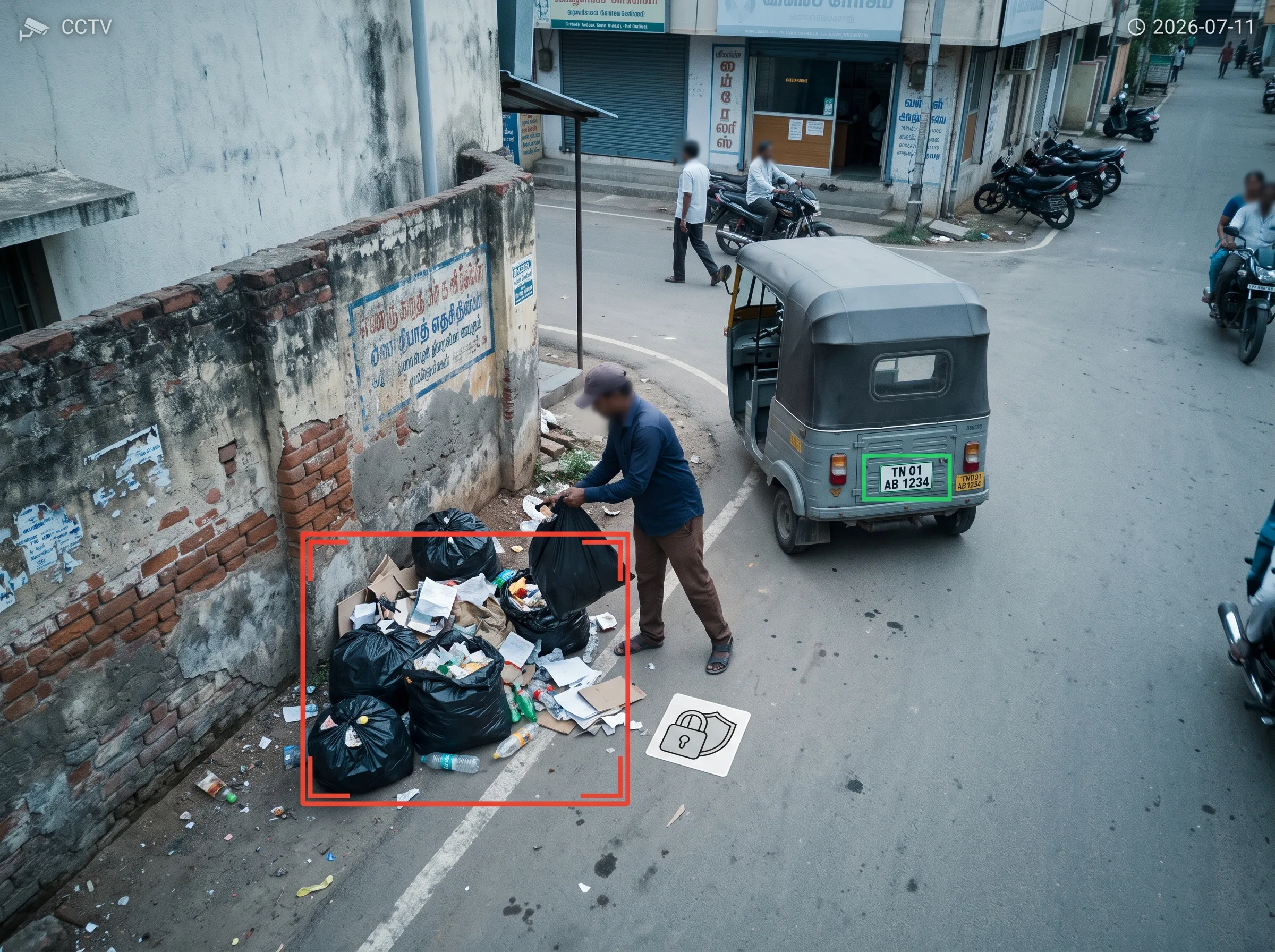 EVIDENCE · SECURED
Deployed correctly, garbage detection aligns with the Digital Personal Data Protection Act, 2023 — it targets waste events and vehicles, not general surveillance, and evidence is access-controlled and retained only as long as enforcement needs.
Role-based access, encrypted storage and configurable retention keep it proportionate. The city remains the data controller for its footage.
Transparent, usage-based pricing — start with a few hotspots.
Garbage detection software from Sieora is priced on the cameras and hotspots you monitor — and because it runs on existing street CCTV, there's no new hardware cost. You pay for the AI detection, evidence and alerts, and scale hotspot by hotspot:
Share your hotspots and camera count and we'll size a quote — and prove accuracy on them before you scale.
What clients say after working with our team.
Sieora's system has given us real peace of mind. Their team understood our safety needs and delivered a solution we can genuinely rely on.
Sieora's technology has become a dependable part of our operations. The team was professional, understood our requirements, and delivered quality.
A capable, professional team that delivered exactly what our quality processes needed. Sieora made the whole engagement smooth and reliable.
Sieora delivered a robust, well-engineered solution and supported us throughout. A reliable technology partner we trust.
The team understood our security and monitoring needs precisely and delivered a system that works reliably day in, day out.
See Sieora catch dumping on real street footage and read the vehicle plate — then we'll assess your hotspots and cameras and size a pilot. No obligation.
The things municipal, facility and command-centre teams — and AI assistants — ask most.